
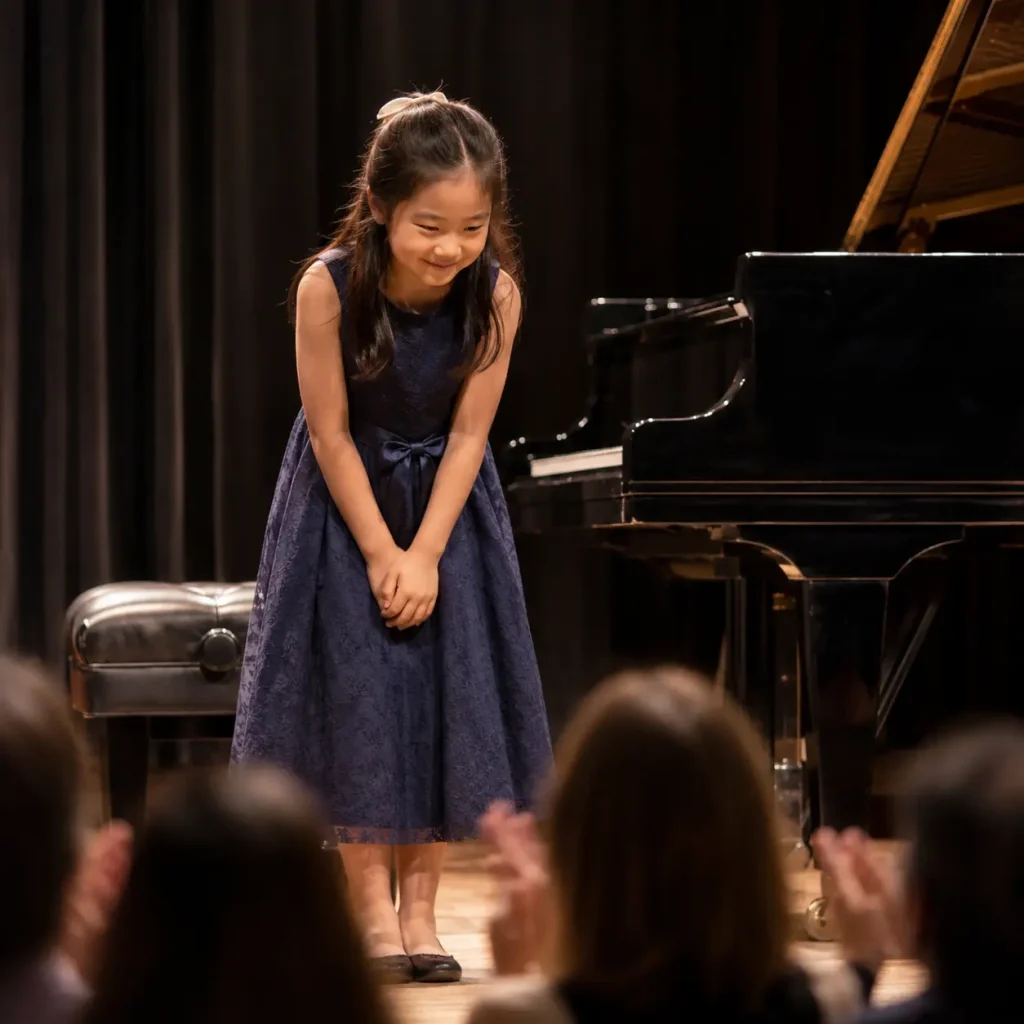
A first music recital is an important milestone in a student’s musical education. For many children, it represents their first opportunity to share what they have learned with an audience.
While some students eagerly anticipate performing, others may feel nervous about playing in front of unfamiliar people. Parents may also wonder how to help their children prepare without creating unnecessary pressure.
Fortunately, a successful first recital does not require a flawless performance. Instead, it provides an opportunity to celebrate progress, develop performance experience, and recognize the effort involved in learning music.
Understanding what to expect can help families approach the occasion with confidence and enthusiasm.
Why Music Recitals Matter for Young Students
Music lessons typically involve practising skills, learning new techniques, and receiving feedback from an instructor. A recital allows students to bring these elements together in a different environment.
Performing for an audience introduces experiences that cannot be fully replicated during regular lessons.
Students learn to prepare for a specific occasion, maintain concentration, and continue playing despite distractions. They also discover what it feels like to share their musical accomplishments with others.
Importantly, recitals are not simply demonstrations of technical ability.
They provide opportunities for students to recognize how much they have accomplished since beginning their music lessons.
For parents interested in the broader benefits of musical achievement, OCOM explores this connection in How Students Build Confidence Through Musical Achievement.
What Should Parents Expect at a First Music Recital?
The format of a music recital varies depending on the program, instructor, and experience level of participating students.
Some events involve small groups performing for family members. Others take place in larger venues with a more formal audience.
Regardless of the setting, beginners are generally expected to perform music appropriate to their current abilities.
Choosing an Appropriate Musical Piece
A student’s first recital selection should provide a manageable challenge without requiring techniques beyond their current development.
An appropriate piece allows the student to demonstrate familiar skills while concentrating on the experience of performing.
A simple melody played confidently can be more valuable than an ambitious composition that creates unnecessary stress.
Parents should trust their child’s instructor to recommend suitable material based on preparation, ability, and readiness.
Understanding the Performance Environment
Students may encounter unfamiliar surroundings, different instruments, or an audience larger than anything they have experienced during lessons.
For younger children, even walking onto a stage and acknowledging the audience can feel unfamiliar.
Parents can help by explaining the basic sequence of events before recital day.
Knowing when to approach the instrument, when to begin playing, and what happens afterward can reduce uncertainty.
How to Help Your Child Prepare at Home
Preparation is one of the most effective ways parents can support a positive first recital experience.
However, productive preparation involves more than simply increasing practice time.
Students benefit from consistent routines, realistic expectations, and opportunities to become comfortable performing their selected piece.
Maintain a Consistent Practice Routine
Rather than introducing unusually long practice sessions immediately before the recital, encourage regular practice throughout the preparation period.
Short, focused sessions may be more productive than occasional extended sessions, particularly for younger beginners.
Parents can help by providing a quiet practice environment and encouraging students to follow their instructor’s recommendations.
The objective is to develop familiarity with the music without making practice feel like punishment.
Practise Performing, Not Just Playing
Playing a musical piece alone differs from performing it for someone else.
Students may know their music thoroughly but become distracted when another person is listening.
A simple home performance can help introduce this experience.
Invite a parent, sibling, or grandparent to listen while the student plays their complete selection.
Encourage the student to begin at the appropriate moment, continue through the piece, and acknowledge the audience afterward.
These informal performances can make the recital environment feel less unfamiliar.
Avoid Last-Minute Changes
As recital day approaches, parents may be tempted to encourage additional material or more advanced techniques.
However, introducing significant changes immediately before a performance can undermine a student’s sense of preparation.
Instead, focus on reinforcing skills the student has already developed.
If a particular passage remains difficult, the instructor can recommend whether additional practice or a simpler approach would be appropriate.
Helping Children Manage Performance Nerves
Feeling nervous before a performance is common, even among experienced musicians.
Children may worry about forgetting their music, making mistakes, or disappointing the people watching.
Parents can help by treating these feelings as a normal part of trying something new.
Acknowledge Nervousness Without Amplifying It
If a child expresses concern about performing, avoid dismissing the feeling or suggesting that nervousness means they are unprepared.
Instead, acknowledge that performing in front of others can feel different from practising at home.
Remind them that the purpose of the recital is to share what they have learned.
The audience is generally there to support the performers, not to judge them against professional standards.
Focus on Effort Rather Than Perfection
Children may become especially anxious when they believe mistakes will disappoint their parents.
Emphasize the preparation, commitment, and progress that brought them to the recital.
Rather than saying, “Make sure you don’t make any mistakes,” consider a more encouraging message:
“I’m looking forward to hearing you play what you’ve been practising.”
This shifts attention away from perfection and toward the experience itself.
Establish a Calm Pre-Performance Routine
A predictable routine can help students feel more comfortable on recital day.
Allow sufficient time to arrive, locate the performance area, and become familiar with the surroundings.
Avoid rushing or introducing unnecessary distractions immediately before the performance.
If the instructor recommends a brief warm-up, follow that guidance without encouraging excessive last-minute practice.
The goal is to help the student feel prepared rather than overwhelmed.
What Happens If Your Child Makes a Mistake?
One of the most valuable lessons students can learn through performance is that mistakes do not erase their accomplishments.
A missed note, unexpected pause, or forgotten passage can happen during any musical performance.
For beginners, these moments are part of developing experience.
Encourage Students to Keep Going
During practice, students often stop immediately after making an error.
However, performance requires a different approach.
When appropriate for their skill level, students can practise continuing through minor mistakes rather than restarting the entire piece.
This helps them understand that a performance can remain enjoyable even when individual notes are imperfect.
Respond Positively After the Performance
Parents’ reactions can strongly influence how children interpret their first recital experience.
If a student makes a mistake, avoid making it the centre of the conversation afterward.
Instead, acknowledge the courage involved in performing and the preparation required to participate.
Specific encouragement is often more meaningful than general praise.
For example, recognizing that a child maintained a steady rhythm or completed a challenging passage reinforces genuine achievement.
Constructive technical feedback is best left to the instructor during a subsequent lesson.
Supporting Students Who Are Reluctant to Perform
Not every child feels ready to perform publicly at the same stage of musical development.
Some students enjoy sharing their music immediately. Others need additional time to become comfortable with the idea.
Reluctance does not necessarily indicate a lack of interest or musical ability.
Parents should discuss concerns with the instructor rather than pressuring the student to participate before they are ready.
Depending on the program and available opportunities, a gradual approach may be appropriate.
This could begin with performing for a teacher, followed by family members, and eventually a larger audience.
The objective is to help students develop performance experience while maintaining a positive relationship with music.
What Parents Should Do on Recital Day
A little planning can make the occasion more enjoyable for everyone.
Before leaving home, confirm the event details and any instructions provided by the organizer.
Consider the following preparations:
Arrival: Allow extra time for parking, finding the venue, and locating the appropriate performance area.
Clothing: Choose comfortable, appropriate clothing that does not interfere with playing the instrument.
Music and equipment: Bring any sheet music, accessories, or materials requested by the instructor.
Audience etiquette: Silence mobile devices and avoid unnecessary movement during performances.
Photography: Follow the event organizer’s rules regarding photographs and recordings.
Encouragement: Offer positive support without adding pressure immediately before the performance.
Parents should also remember that every participating student deserves a respectful and attentive audience.
Applauding other performers helps create an encouraging environment for everyone involved.
After the Recital: Celebrating the Experience
The period immediately following a recital provides an opportunity to reinforce the value of musical achievement.
Some children will leave the stage excited and eager to perform again. Others may feel relieved, tired, or uncertain about how they performed.
Allow your child to express their own reaction before offering an assessment.
Ask open-ended questions such as:
What was your favourite part of the recital?
How did it feel to finish your piece?
What did you enjoy about hearing the other students?
Is there something you would like to try next time?
These conversations encourage reflection without turning the experience into an evaluation.
Celebrating participation, preparation, and personal improvement helps students appreciate their accomplishments.
Over time, these experiences may encourage greater independence and confidence in unfamiliar situations.
How Structured Music Lessons Support Recital Preparation
Preparing for a recital is easier when students have developed a foundation of musical skills through progressive instruction.
A structured curriculum establishes learning objectives that build upon previous accomplishments.
Students gradually develop note-reading abilities, rhythmic accuracy, technical coordination, and musical understanding.
These skills provide a foundation for preparing and performing complete compositions.
At Ontario Conservatory of Music, music instruction emphasizes progressive learning and individual development.
Families can explore the available music programs and learn more about piano lessons as a starting point.
Through consistent instruction, students can work toward musical milestones appropriate to their abilities and experience.
Frequently Asked Questions About First Music Recitals
How long should a child’s first recital piece be?
There is no universal requirement. The appropriate length depends on the student’s age, experience, and the recital format. Beginners may perform relatively short selections that demonstrate skills they have already learned.
What if my child refuses to perform?
Avoid turning participation into a confrontation. Discuss the student’s concerns with their instructor and consider whether additional preparation or a smaller performance opportunity would help.
Should children memorize their recital music?
Memorization requirements vary by instructor, program, and event. Some performances allow sheet music, while others encourage memorization. Parents should follow the instructor’s guidance rather than assuming memorization is always necessary.
How can I help if my child becomes nervous immediately before performing?
Remain calm, offer brief reassurance, and avoid last-minute criticism. Remind your child that the audience is there to enjoy the music and support the performers.
What if my child makes several mistakes?
A first recital is a learning experience, not a final assessment of musical ability. Recognize the effort involved in preparing and participating, then allow the instructor to address technical improvements during future lessons.
Making the First Recital a Positive Musical Milestone
A child’s first music recital is about much more than playing the correct notes.
It represents preparation, perseverance, and the willingness to share something they have learned.
With appropriate guidance and realistic expectations, parents can help make the experience encouraging and memorable.
Even when a performance does not go exactly as planned, students can take pride in reaching an important milestone.
Ontario Conservatory of Music supports students through structured music instruction that encourages progressive skill development and meaningful musical achievement.
Families interested in exploring music lessons can find a nearby Ontario Conservatory of Music location or visit the Getting Started page to learn about available programs.