
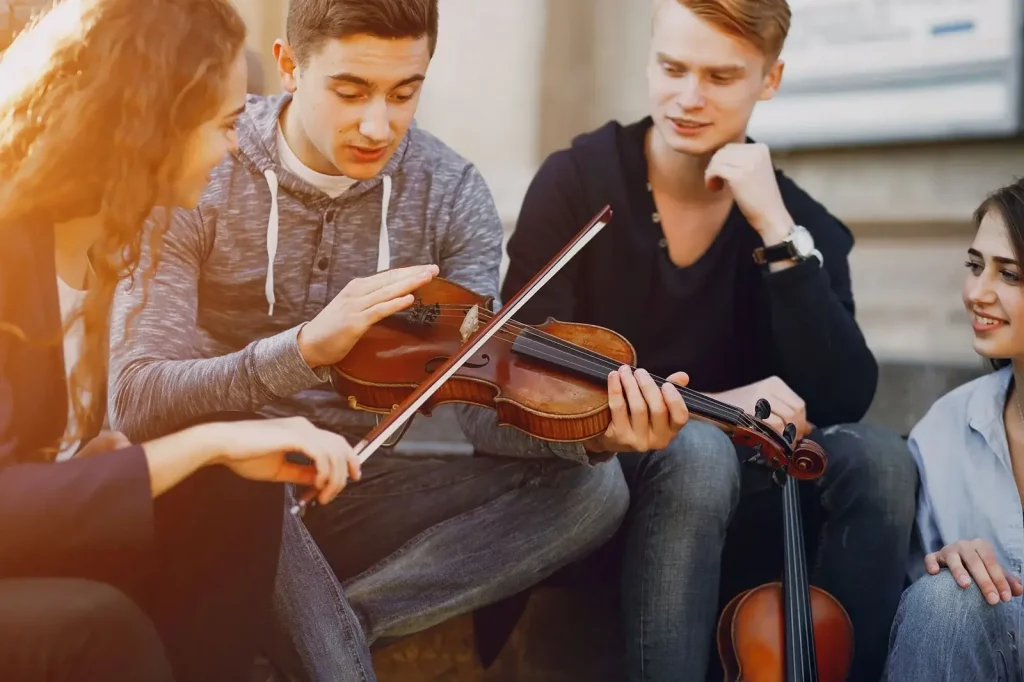
Learning through group music lessons offers a unique set of advantages for students to acquire knowledge and develop their musical skills. In this type of setting, students learn alongside others, rather than in a one-on-one environment with a private music instructor. A group music teacher generally leads the class, providing instruction, guidance, and feedback while students interact in shared activities which provide opportunities for collaboration, social interaction, and peer learning.
Key Features of a Group Music Class
Classes in a group music education range from beginner to advanced levels and are offered in a variety of categories, such as instrumental instruction, singing lessons and vocal training, theory, history or ensemble performance activities.
Let’s explore the many benefits you can acquire from learning with others:
Shared Learning Experiences
When learning with others, students are encouraged to tackle challenges and projects by working together. Whether it’s working on a collective composition or learning how to harmonize and blend their voices in a choir, students join forces in a collaborative effort to make the music come to life.
By interacting with each other, they build connections with their classmates and teachers. This promotes teamwork and cooperation, fosters a sense of belonging and creates lasting friendships based on their shared passion for music.
Cost-Effectiveness
A group music school typically has multiple students in one class session, and they have access to shared resources like sheet music, recordings, instruments, or practice rooms. This contributes to reducing overall administrative costs and makes it a less expensive option than private lessons, while still maintaining a high-quality learning experience.
Efficiency in Teaching
Group music teachers usually facilitate one lesson for multiple students during each session, making it a more efficient use of the instructor’s time. The teacher can teach theory, rhythm, or general techniques to the whole class and then provide individualized attention during practice or exercises.
Improved Performance Skills
One of the biggest advantages of learning with a team is the chance to practice and perform in an ensemble. Whether it’s as a quartet, a band or orchestra, playing as part of a unit teaches timing, rhythm, and how to stay in sync with other musicians.
As you practice and play together, you learn how to listen carefully to others and make adjustments to your own style so that you complement the sounds of the other musicians. These skills help strengthen your artistry as well as technical proficiency and are vital for collaborative performances in the real world.
Peer Encouragement
Learning in group music schools fosters friendly competition and camaraderie, helping students to encourage and support each other. As they see their peers progress, they are often motivated and inspired to push themselves further. Knowing they’ll be practicing and performing with others in the class gives them the commitment and drive to practice and continuously improve their skills for the betterment of the whole.
Interactive Learning
In a group music class, lessons focus on student participation, collaboration, and hands-on activities that make learning more engaging and effective. A group music teacher will typically incorporate a wide range of musical activities, such as sight-reading, rhythm drills and collective improvisation to create an environment where learners are not just memorizing and passively receiving information but are actively engaged in the learning process.
With multi-sensory learning and active involvement, students tend to be more motivated and focused and also helps them remember and recall information or skills they’ve learned more effectively.
Collaborative Problem Solving
A team-oriented setting often requires students to share ideas, negotiate, and solve problems together. Students give and receive constructive feedback from their classmates. This peer-to-peer interaction encourages motivation and faster progress as it allows them to help others learn as they also learn from other’s experiences. They work through challenges as a team, combining their knowledge and skills to solve the problem. Whether it’s perfecting a musical note or learning a difficult classical piece, each member contributes their expertise and insights and work together towards a common goal.
Exposure to Different Styles and Techniques
In ensemble classes, each student brings their own unique background and musical influences. This diversity exposes students to new genres, styles, and techniques that they may not have encountered in private lessons. Beginners may learn from more advanced students, and everyone can broaden their musical tastes and knowledge, helping them become more versatile musicians.
Another advantage of group music education is the interaction with other musicians who play different instruments, particularly when you’re in performance activities with a band or orchestra. This gives you the chance to hear and sometimes try out instruments you are unfamiliar with (e.g., strings, brass, woodwinds, percussion). In addition, this also helps broaden your understanding of how different instruments contribute to the overall sound of an ensemble, expanding your ability to adapt to different settings.
Increased Performance Confidence
Many group music classes include recitals, concerts, or informal performances, giving students the chance to showcase their progress in front of a live audience.
Group settings are ideal for students to build confidence and develop stage presence. Performing in front of others can be intimidating, but in a group, it feels less daunting. Students become more comfortable with public performances because they can rely on the support of their peers.
Types of Group Music Classes
Classes with Same Instruments
Lessons focus on a single type of instrument, such as piano classes, guitar lessons, drum lessons, or string ensembles. These classes allow for more focused learning on the unique aspects of the specific instrument. Students can work on specialized skills, techniques, and repertoire for that particular instrument, and there is often more personalized instruction in terms of their specific challenges and growth. An example would be a beginner group piano class where everyone learns foundational piano skills in a group setting under the guidance of a group music instructor.

Mixed Instrument Group Lessons
These types of classes offer a well-rounded experience as students are exposed to different instruments (e.g., strings, woodwinds, brass, percussion, keyboards, or vocals). Each member learns how to balance and harmonize with different instruments and voices to create a unified sound. A good example is a rock band class with different members playing the electric guitar, bass guitar, drums, keyboard/piano, and vocals in coordination with the others to create a full sound.
Group Singing Classes
Learning to sing with others is a wonderful way to learn vocal techniques, harmonize with peers, and perform together with your teammates in a collaborative, supportive environment. Examples of group singing lessons are choirs, glee clubs and rock bands.
Music Theory Group Classes
Multiple students learn the fundamental concepts like melody, harmony, rhythm, and form alongside others, which fosters a collaborative and supportive environment. A participatory environment allows for shared discussions and problem-solving, making it easier for students to understand challenging concepts through interaction but without the expectation of performing as a cohesive unit.
Choosing a Group Music Program
Whether you’re looking for a piano class or a beginner choir ensemble, there are plenty of options available to help you learn and grow your skills together with other students. Consider what techniques you want to develop, the type of experience you’re looking for, and your schedule. Whatever program you choose to pursue, group music lessons provide a well-rounded educational experience that nurtures not only your musical skills but also your personal growth as an artist.