
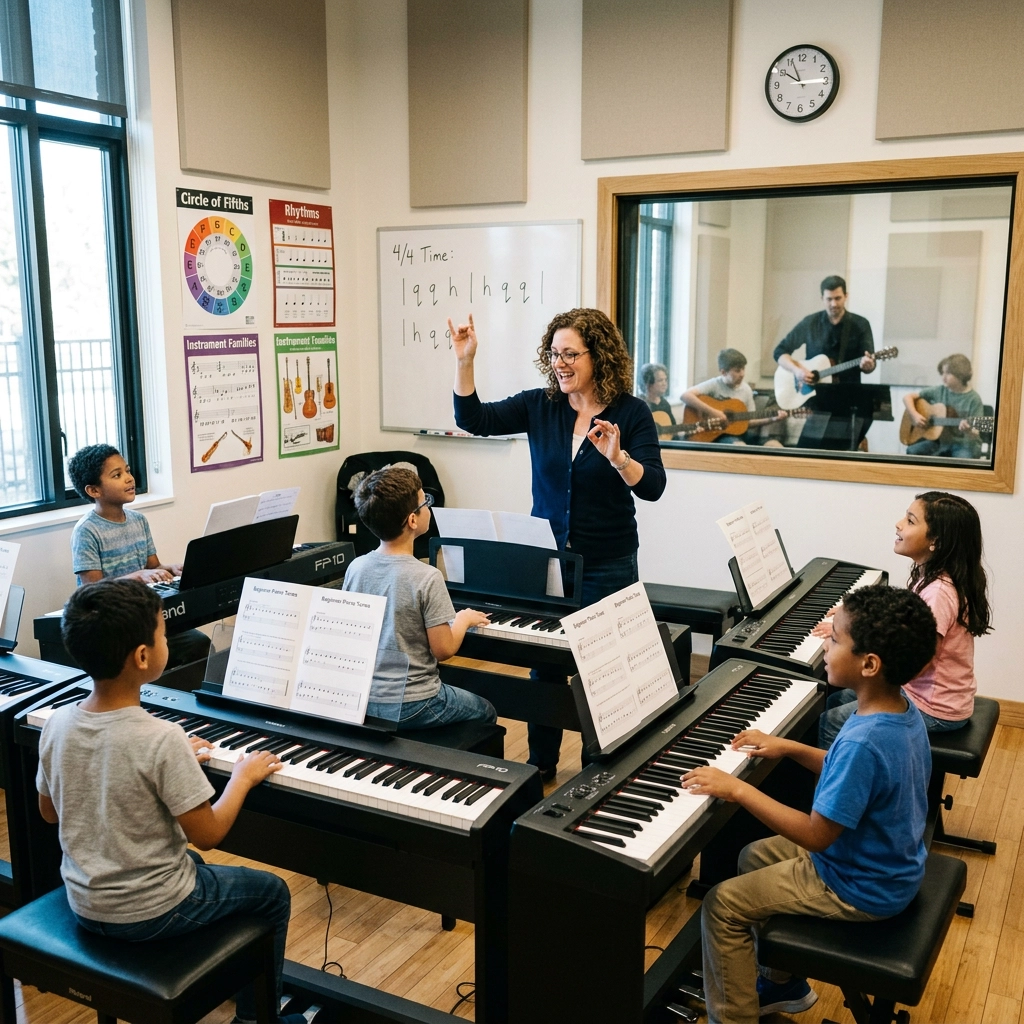
Group music teachers are transforming the way music is taught by using inclusive, dynamic strategies that turn classrooms into thriving creative spaces. In ensemble settings, these educators don’t just teach musical notes and rhythms they cultivate collaboration, adapt to diverse learning needs, and use innovative approaches that inspire students of all ages.
Understanding the Ensemble Dynamic
Teaching music in collaborative formats requires a different mindset from one-on-one instruction. Instead of tailoring a lesson to a single learner, group music teachers must engage multiple students at varying levels of experience—all while keeping the energy high and the content accessible.
These teachers are facilitators, conductors, and collaborators all at once. They must assess student progress in real time, manage ensemble interactions, and ensure every learner is actively participating and developing. Whether they are working with young beginners or adult enthusiasts, their role extends beyond technique—they foster an environment of curiosity, creativity, and mutual respect.
To do this effectively, group music instructors first assess the composition of their class—age, experience, and goals—to tailor their approach. For example:
- Group music lessons for children often emphasize play-based learning and movement.
- Adult choir or instrumental classes may focus more on theory, technique, and ensemble coordination.
Instructors must also foster a sense of community. This is especially important in choirs or ensemble-based group music programs, where collaboration and mutual support are essential. A teacher who cultivates trust and camaraderie among students lays the foundation for a productive and enjoyable learning environment.
Teaching Formats and Styles in Group Music Education
Learning to play or sing isn’t a one-size-fits-all experience. Teachers adapt their methods in shared learning environments based on the age, size, and goals of each class.
1. Large Ensemble Teaching
This is commonly found in choirs, school bands, or orchestras. The teacher operates like a conductor, focusing on synchronizing a large number of students. Lessons emphasize timing, intonation, cohesion, and often culminate in public performances. Choir lessons for kids are an example where this model fosters confidence and ensemble awareness from a young age.
2. Collaborative workshops
In a group music school or community program, Interactive learning sessions are popular. These typically include 3–10 students and allow for more individual attention while still maintaining the benefits of collaborative learning. Group music lessons for children are often delivered in this style, with games and interactive exercises keeping lessons fun and engaging.
3. Rotational Lessons
Here, students move between stations or different activities during a group music lesson. Each station may focus on a specific skill—rhythm training, theory, ear training, or instrument technique. This format keeps students engaged and allows teachers to differentiate instruction based on ability levels.
4. Mixed-Level Classes
In group music classes, especially community or after-school programs, students often enter with varying experience. Teachers adapt by assigning parts based on skill or encouraging peer mentoring. This structure is common in adult music lessons, where returning learners might be mixed with beginners.
5. Performance-Based Learning
Many group music programs focus on preparing students for ensemble performances. Teachers in this format use rehearsals as both a teaching tool and a way to build motivation. The pressure and excitement of performing push students to practice more and work as a team.
Core Teaching Strategies for Group Instruction
To teach effectively in a collaborative format, educators need a diverse toolbox of strategies. Below are some of the most commonly used by successful instructors:
1. Differentiated Instruction
Teachers often teach mixed-ability classes. Differentiated instruction allows them to modify lesson content and difficulty for individuals while keeping the whole group on track. For example, while beginners practice simple melodies, more advanced students may work on harmonization or improvisation.
2. Peer Learning and Collaboration
Peer-to-peer learning is a powerful strategy. In a well-managed group, students teach and learn from one another naturally. A more experienced student might help a peer master a rhythm, while another might model a technique. This also boosts confidence and reinforces understanding.
3. Layered Repertoire Approach
This technique involves assigning different parts of a piece according to skill level. In a group music program, beginners might play foundational rhythms while advanced students add melodic or harmonic layers. It allows everyone to contribute meaningfully, regardless of experience.
4. Call and Response
This strategy helps develop listening skills, timing, and memory. The group music teacher plays or sings a short phrase, and students echo it back. This works well in music lessons for kids and adults alike, supporting ear training and ensemble timing.
5. Integrating Movement and Games
Especially in group music lessons for children, movement-based activities and games are essential. They keep energy levels up, improve motor coordination, and reinforce concepts like tempo, dynamics, and rhythm in a memorable way.
6. Visual Aids and Technology
Modern group music schools incorporate visual tools like charts, whiteboards, and projector screens. In some programs, apps and recording devices allow students to review their progress, compose, or engage with digital instruments.
7. Routine and Repetition
A consistent lesson structure supports classroom management and sets clear expectations. Educators leading shared-format classes often begin with warm-ups, move into theory and practice, and conclude with a joint play-along or performance.
Classroom Management and Engagement
Managing a group music class requires more than expertise—it demands leadership, empathy, and the ability to adapt in real time. Whether teaching at a community center, a school, or a group music school, educators must create an environment where students can thrive musically and socially. Effective classroom management plays a crucial role in supporting student engagement, maintaining focus, and encouraging consistent progress.
Unlike private music programs, where instruction is one-on-one, group settings involve balancing multiple personalities, skill levels, and learning styles simultaneously. That’s why teachers rely on a blend of structure and flexibility to guide their classes. Here are several key tactics commonly used:
- Clear Expectations – Establishing rules and routines at the outset helps maintain order and mutual respect. When students know what’s expected of them, transitions are smoother, and the learning atmosphere becomes more focused.
- Positive Reinforcement – Celebrating small wins—such as mastering a new technique or confidently performing in front of peers—keeps motivation high, especially in music lessons for kids, where encouragement is essential for building self-esteem.
- Flexible Pacing – Group instructors must remain responsive to student feedback. Some days may require revisiting earlier material, while others allow for faster progression. Adapting the lesson pace ensures that no student feels left behind or unchallenged.
- Interactive Warm-Ups – Starting each session with rhythm games, body percussion, or vocal exercises energizes the group and sets a positive tone for the rest of the lesson. These warm-ups also serve to reinforce foundational skills in a fun and engaging way.
- Inclusive Participation – Every student should feel involved—whether they’re playing an instrument, singing, conducting, or even assisting with setup. Inclusive participation fosters teamwork, boosts confidence, and creates a stronger sense of community within the group.
In well-run classrooms, students are more engaged, better behaved, and more enthusiastic about learning. Whether in a formal group music school setting or as part of a supplement to private music programs, effective classroom management is essential for creating a cohesive, inspiring learning experience.
Adapting to Different Ages and Learning Needs
Group music teachers often work with a wide age range, from toddlers exploring their first rhythms to retirees rediscovering their love for music. Each age group brings unique needs, learning styles, and expectations—requiring teachers to adapt their methods accordingly for the most effective instruction.
Children
Group music lessons for children should be playful, sensory-rich, and movement-oriented. Young learners thrive on repetition, hands-on activities, and imaginative play. Incorporating storytelling, puppetry, or colorful visuals can make lessons more memorable and help introduce fundamental concepts like rhythm, pitch, and tempo in an engaging way. Activities that involve clapping, singing, or moving to the beat help build both musical and motor skills.
Teens
Many youth-focused creative schools offer programs designed for teens, including modern styles, digital production, and ensemble collaboration—giving them structure and space to shape their artistic voice.
Adults
Adult learners often bring different motivations and challenges to the classroom. In settings like an adult choir or instrumental group class, it’s essential to respect their time constraints, set realistic goals, and maintain a welcoming, low-pressure environment. Incorporating humor, social bonding, and music that reflects their interests helps sustain engagement. Many adults join group classes for stress relief, community connection, or personal enrichment, so flexibility and encouragement are key.
Whether teaching music lessons for kids, teens, or adults, successful instructors tailor their strategies to match cognitive development, emotional needs, and life stages. This thoughtful approach not only improves outcomes but also ensures students feel seen, supported, and motivated—regardless of their age or experience level.
Conclusion
By using diverse teaching styles, interactive strategies, and student-centered formats, educators in group settings create vibrant learning environments that support both individual growth and collective harmony. Their ability to foster collaboration, adapt to different skill levels, and inspire long-term engagement makes group instruction a powerful force in modern music education. At the heart of this dynamic approach are group music teachers, who continue to shape the future of musical learning for students of all ages.
Discover the joy of learning music alongside others in a supportive setting! Join our group music classes and watch your confidence and creativity grow. Enroll now and join our friendly community.