
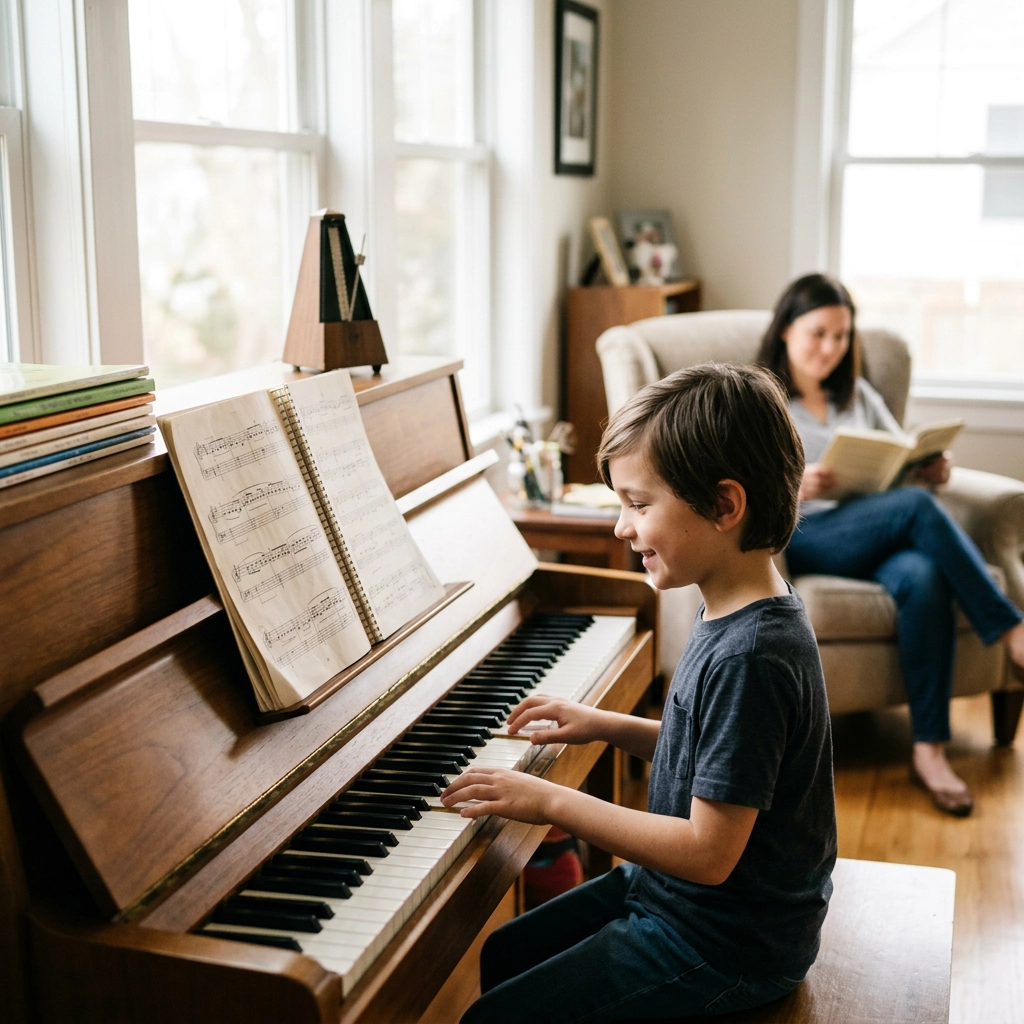
One of the first questions parents ask after their child’s first piano lesson is, “How much should they practice?” It’s a fair question, but there isn’t a one-size-fits-all answer.
The amount of piano practice a child needs depends on several factors, including their age, experience, attention span, and personal goals. More importantly, successful practice isn’t measured only by minutes—it is measured by consistency, focus, and enjoyment.
After nearly 90 years of teaching students of all ages, Ontario Conservatory of Music has found that children make the greatest progress when practice becomes a natural part of everyday life rather than an occasional marathon session before lessons.
Whether your child is just beginning or already progressing through more advanced repertoire, these guidelines can help you create healthy practice habits that encourage long-term success.
Why There Isn’t One Perfect Practice Time
Parents often hope for a simple answer:
“Should my child practice 20 minutes? 30 minutes? An hour?”
The reality is that every student learns differently.
Several factors influence how much practice is appropriate:
- Age and maturity
- Current skill level
- Ability to focus
- Lesson objectives
- Personal motivation
- Upcoming performances or examinations
A six-year-old beginner has very different needs than a teenager preparing for a Royal Conservatory examination. Rather than comparing your child to someone else, it is more helpful to focus on steady improvement from week to week.
Recommended Piano Practice by Age
Although every student is different, the following guidelines work well for many beginning and intermediate students.
| Age | Suggested Daily Practice |
|---|---|
| 4–6 years | 10–15 minutes |
| 7–10 years | 20–30 minutes |
| 11–14 years | 30–45 minutes |
| Teenagers | 45–60+ minutes depending on goals |
These recommendations are guidelines—not rules.
Some younger students happily practice longer because they enjoy what they’re learning. Others may benefit from two shorter sessions instead of one longer one.
A focused 20-minute practice session is often far more productive than an unfocused hour.
Quality Matters More Than Quantity
Parents sometimes assume that longer practice automatically leads to faster progress.
In reality, effective practice is about how students spend their time.
A productive practice session might include:
- Reviewing last week’s assignments.
- Slowing down difficult passages.
- Correcting mistakes instead of repeating them.
- Practising hands separately when appropriate.
- Finishing with a favourite piece.
Simply playing the same song from beginning to end several times rarely produces the same results as thoughtful, focused practice.
As students become more experienced, teachers gradually introduce strategies that help them practise independently and make better use of their time.
Make Practice a Habit, Not a Chore or a Punishment
One of the most common challenges parents face isn’t finding time for piano practice—it’s helping their child see practice as a normal part of learning rather than something to avoid.
When practice becomes a daily battle or is used as a consequence for poor behaviour, children can begin to associate the piano with negative feelings instead of enjoyment and accomplishment.
Instead, try to make practice part of the family’s normal routine, much like reading before bed or completing other daily responsibilities. A predictable schedule reduces the need for constant reminders and helps children know what to expect.
Parents can help by:
- Choosing a consistent practice time.
- Keeping sessions age-appropriate.
- Praising effort rather than perfection.
- Celebrating small improvements.
- Ending practice on a successful piece whenever possible.
- Avoiding the use of piano practice as a punishment or bargaining tool.
Over the years, we’ve found that the students who make the most consistent progress aren’t necessarily the ones who practice the longest—they’re the ones whose families make practice a predictable, positive part of everyday life.
The goal isn’t simply to complete today’s practice. It’s to help children develop a lifelong appreciation for making music.
Choose Music That Inspires Practice
Children are naturally more motivated to practise when they’re excited about the music they’re learning.
While technique, sight reading, and foundational repertoire are essential parts of music education, incorporating music that reflects a student’s interests can make practice feel rewarding instead of repetitive.
For younger students, that may mean familiar melodies or fun character pieces.
Older students often enjoy learning arrangements of movie themes, contemporary music, or other pieces that complement their structured curriculum.
The goal isn’t to replace the fundamentals—it’s to support them. Students still need to develop strong technique, music reading skills, and a solid understanding of theory. However, when children genuinely enjoy some of the music they’re learning, sitting down to practice often becomes much easier.
Maintaining enthusiasm is an important part of long-term musical success.
Signs Your Child Is Practising the Right Amount
Rather than watching the clock every day, look for signs that practice is helping your child grow.
Positive indicators include:
- Steady improvement from lesson to lesson.
- Increased confidence when playing.
- Better familiarity with assigned pieces.
- Willingness to practise without constant reminders.
- Excitement about learning new music.
Progress doesn’t happen overnight.
Music education is a gradual process, and small improvements made consistently often lead to significant achievements over time.
What Nearly 90 Years of Teaching Has Taught Us
After teaching generations of students, we’ve noticed several common patterns.
Students who make the greatest long-term progress often:
- Practice consistently, even when sessions are short.
- Develop routines that become part of everyday life.
- Stay motivated because they enjoy the music they’re learning.
- Focus on improvement rather than perfection.
- Receive encouragement from parents without feeling pressured.
Interestingly, some of the students who practised the longest each week weren’t always the ones who progressed the fastest. Consistency, patience, and positive habits usually produce better results than occasional marathon practice sessions.
Building healthy routines today often leads to years of enjoyable music-making tomorrow.
Final Thoughts
There is no magic number when it comes to piano practice.
The right amount depends on your child’s age, experience, and goals. More importantly, successful practice is built on consistency, quality, and enjoyment—not simply the number of minutes spent at the piano.
By creating a positive routine, encouraging steady progress, and helping children enjoy the music they are learning, parents can support habits that last well beyond beginner lessons.
If you’re considering piano lessons for your child, Ontario Conservatory of Music has been helping students develop strong musical foundations for nearly 90 years through structured instruction, experienced teachers, and programs designed for long-term success.
Frequently Asked Questions
How often should kids practice piano?
Most children benefit from practising most days of the week. Short, consistent sessions generally produce better results than one or two long sessions each week.
Is 15 minutes of piano practice enough?
For many young beginners, yes. A focused 10 to 15-minute practice session can be very effective when students are learning basic skills and developing good habits.
What if my child misses a day of practice?
Missing an occasional day isn’t a problem. Simply return to the normal routine the next day. Consistency over weeks and months is much more important than perfection.
Should children practice every day?
Daily practice helps build routine, but every family’s schedule is different. The goal is to establish a pattern that your child can maintain comfortably over the long term.
How can I motivate my child to practice without arguing?
Keep practice positive, celebrate small successes, choose a consistent daily time, and avoid using piano practice as a punishment. Children are generally more motivated when they enjoy both the learning process and the music they’re playing.