
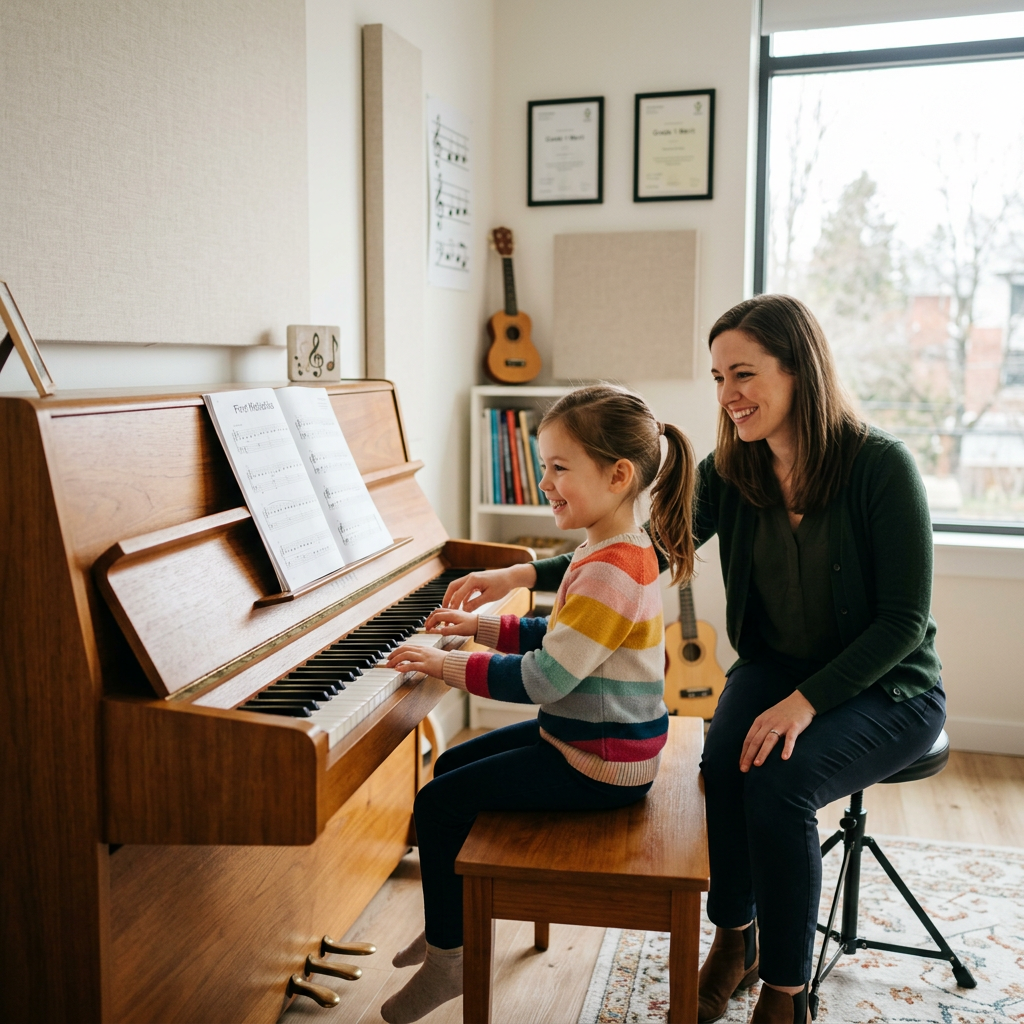
Parents often ask one important question before enrolling their child in music education programs or piano lessons: “What age should a child start piano lessons?”
The answer isn’t simply a number. While many children begin piano lessons between four and six years old, readiness depends on much more than age. Every child develops at a different pace, and the best time to begin is when they are emotionally, physically, and mentally prepared to enjoy the learning process.
After nearly 90 years of teaching students across the Greater Toronto Area, Ontario Conservatory of Music has found that successful piano students come from many different starting points. Some begin in kindergarten, while others discover music much later. The common factor isn’t starting early—it’s starting when the student is ready to learn and supported by a consistent educational program.
Why Readiness Matters More Than Age
Parents sometimes worry that waiting another year might put their child behind.
In reality, children who are ready to learn often progress more confidently than those who begin before they have developed the necessary skills.
Some signs of readiness include:
- Following simple instructions
- Sitting and concentrating for short periods
- Recognizing patterns
- Showing curiosity about music
- Demonstrating basic hand coordination
- Being willing to practice with encouragement
These skills help students enjoy lessons rather than becoming frustrated.
Ages 4–6: An Excellent Time to Begin
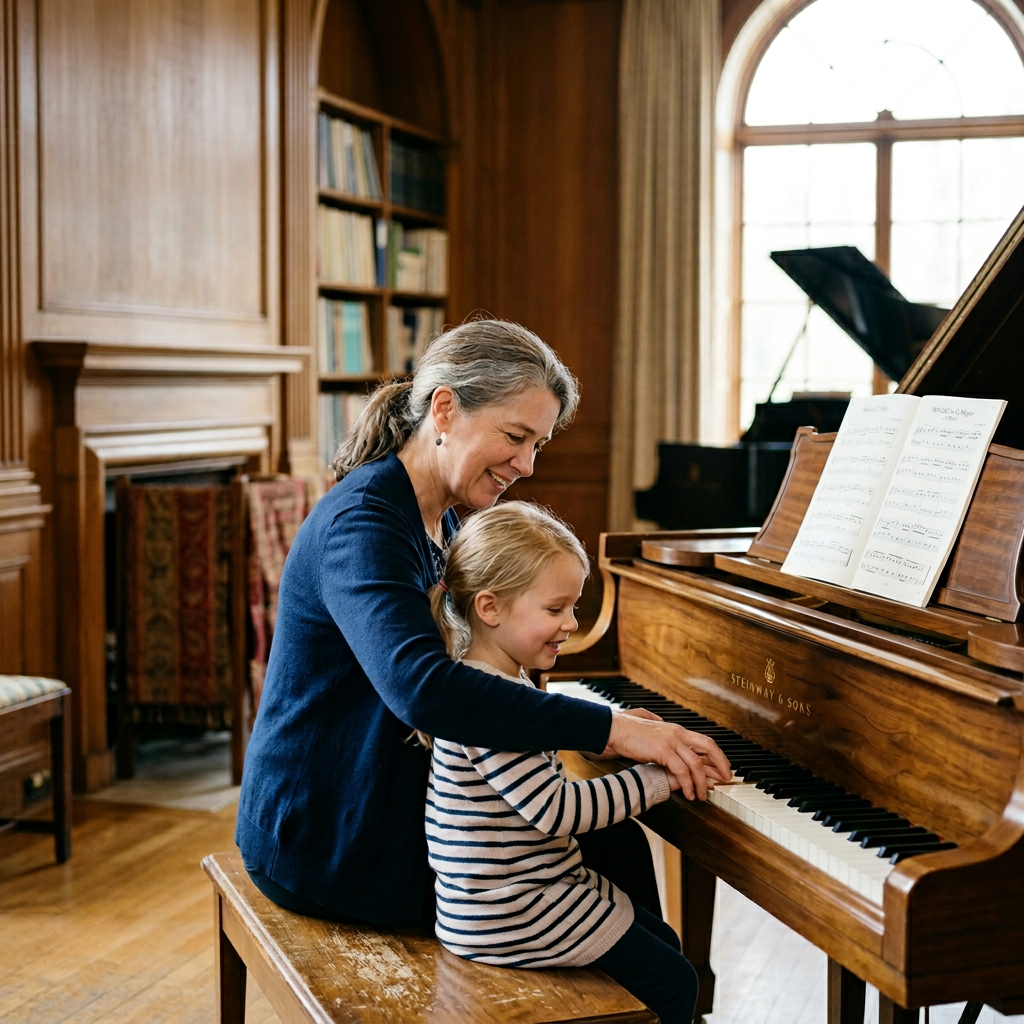
Many children begin piano lessons between the ages of four and six.
At this stage, lessons focus on building strong musical foundations rather than rushing toward advanced pieces.
Students learn:
- Basic rhythm
- Finger coordination
- Listening skills
- Reading simple musical notation
- Good posture and technique
- Musical confidence
Lessons are typically interactive and designed to match a young child’s attention span while gradually introducing new concepts.
Parents also play an important role during these early years by helping establish consistent practice routines at home.
Ages 7–10: A Strong Window for Learning
Children who begin between seven and ten often progress quickly because they typically have:
- Longer attention spans
- Improved reading ability
- Better fine motor skills
- Greater independence
- Increased patience for practicing
At this age, students can usually understand musical concepts more deeply while still developing excellent technical habits.
Many parents are surprised to discover that beginning at seven or eight is often just as successful as beginning several years earlier.
Teen Beginners Can Be Very Successful
Some students don’t discover an interest in piano until middle school or high school.
That is completely normal.
Teenagers often bring advantages that younger students have not yet developed, including:
- Strong personal motivation
- Better discipline
- Longer practice sessions
- Greater ability to understand music theory
- Clear personal goals
Although teenagers may progress through beginner material more quickly, they still benefit from learning proper technique from the beginning.
Starting later does not prevent students from becoming accomplished musicians.
There Is No Such Thing as “Too Late”
Parents sometimes worry they have missed the ideal opportunity if their child didn’t begin at a young age.
Fortunately, music education doesn’t work that way.
Students who begin later frequently achieve excellent results because they are choosing to learn rather than being encouraged to participate before they are ready.
Adults also successfully begin piano every year.
Learning music is not a race. It is a skill that develops over time through quality instruction and consistent practice.
What OCOM Has Learned Over Nearly 90 Years
One advantage of nearly nine decades of music education is the opportunity to observe thousands of students across multiple generations.
While every student is unique, some patterns consistently emerge.
Students who experience long-term success usually:
- Attend lessons consistently
- Practice regularly
- Receive encouragement from parents
- Focus on gradual improvement rather than perfection
- Learn through a structured curriculum
Interestingly, natural talent is rarely the deciding factor.
Students who develop steady habits often outperform those who rely only on ability.
That observation has remained remarkably consistent throughout OCOM’s history.
Supporting Students Beyond Piano Technique
Learning piano involves much more than playing notes correctly.
A comprehensive music education may include:
- Music theory
- Ear training
- Harmony
- Music history
- Performance opportunities
- Examination preparation for students who choose that path
These elements help students develop a broader understanding of music while supporting long-term growth.
Rather than focusing only on short-term progress, a structured educational approach helps students build lasting musical knowledge.
How Parents Can Help New Piano Students
Parents do not need musical experience to help their children succeed.
Simple habits often make the biggest difference.
Try to:
- Create a consistent weekly practice schedule.
- Celebrate effort instead of perfection.
- Keep practice sessions positive.
- Encourage patience during the learning process.
- Communicate regularly with your child’s teacher.
A supportive home environment often contributes more to success than starting at a particular age.
Choosing the Right Music School
Age is only one part of the decision.
Parents should also consider whether a music school offers:
- Experienced instructors
- A structured curriculum
- Age-appropriate teaching methods
- Performance opportunities
- Long-term educational planning
- Nearly 90 years of proven teaching experience
These factors help students continue enjoying music well beyond their first few lessons.
Final Thoughts
So, what age should a child start piano lessons?
For many children, ages four to six provide an excellent introduction to music. Others may be better prepared at seven, eight, or even later. Teenagers and adults can also become successful musicians when they begin with realistic expectations and quality instruction.
Rather than focusing on finding the perfect birthday, parents should look for signs of readiness, choose a structured educational program, and encourage consistent practice over time.
When students begin at the right time for them, they are far more likely to enjoy music, stay motivated, and continue learning for years to come.
If you’re considering piano lessons for your child, OCOM’s experienced instructors can help assess readiness and recommend a program that matches your child’s age, goals, and learning style. Visit our Getting Started page to learn more about our music programs and find the right fit for your family.
Frequently Asked Questions
Is four years old too young for piano lessons?
Not necessarily. Many four-year-olds are ready to begin, particularly if they can focus, follow instructions, and enjoy structured activities. Readiness is usually more important than age alone.
Is seven too late to start learning piano?
Not at all. Many students who begin between seven and ten progress very quickly because they have stronger reading skills, longer attention spans, and greater independence.
Can teenagers start piano lessons?
Absolutely. Teen beginners often succeed because they are highly motivated and can understand musical concepts more quickly than younger children.
How much should beginners practice?
Short, consistent practice sessions are usually more effective than occasional long sessions. Your teacher can recommend an age-appropriate routine based on the student’s experience.
Does every student need to take music examinations?
No. Some students enjoy working toward formal examinations, while others simply want to learn for personal enjoyment. A quality music program can support either path.