
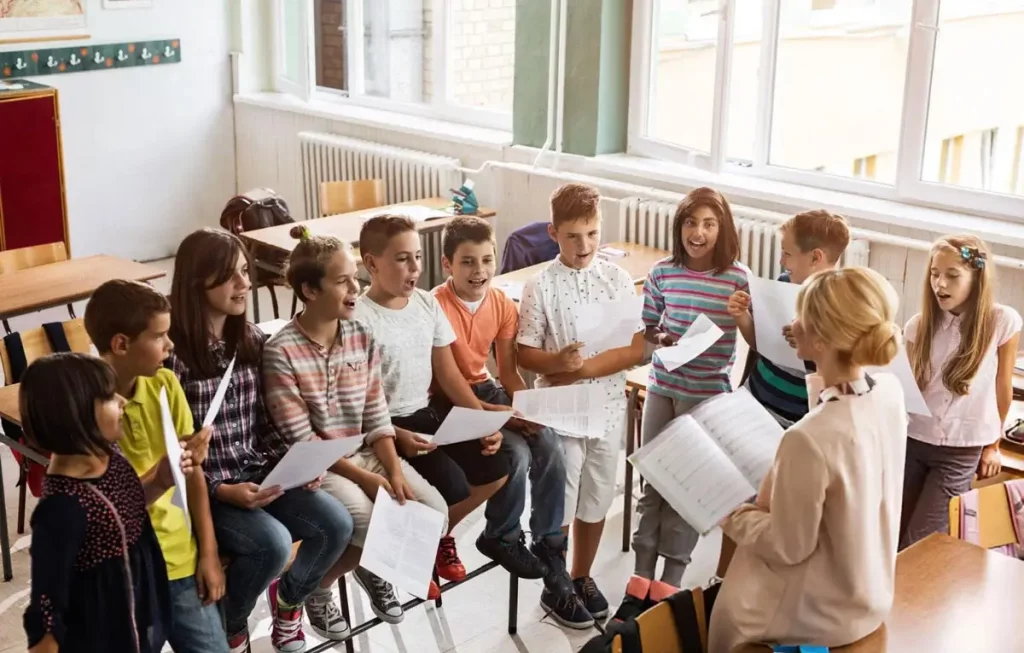
In group singing classes, individuals come together to learn, practice, and perform singing techniques as a team. Lessons are usually led by a vocal instructor and focus on developing vocal skills, harmonization, and ensemble singing within a collaborative setting. They can be offered for various experience levels, from beginners to advanced singers, and are often a fun and supportive environment for singers to learn together.
Joining a group vocal class is a wonderful way to learn and grow as a vocalist while experiencing the joy of harmonizing with others, and performing in a collaborative, supportive environment. While private singing lessons focus on honing individual vocal technique, group vocal classes offer a unique experience that combines developing basic musical skills with social engagement and confidence building.
Benefits of Group Music Lessons
Many aspiring singers wonder whether they should take individual lessons or join a group singing class. While both options have their merits, vocal programs in a collaborative setting offer distinct advantages that make them an appealing choice.
1. Social Connection and Support
Singing in a group provides an opportunity to build friendships and collaborate with others who share a passion for music. The camaraderie that develops in a team setting can boost confidence and motivation, making learning more enjoyable. Whether bonding over shared vocal exercises or celebrating progress together, group singing fosters a strong sense of belonging.
2. Improved Listening and Harmonization Skills
One of the greatest skills developed in group singing is the ability to harmonize and blend with others. Unlike solo lessons, where the focus is solely on personal vocal development, ensemble vocal lessons teach singers how to listen actively and adjust their voices to complement their peers. This is essential for anyone interested in choral singing or performing in an ensemble.
3. Cost-Effective Learning
Collaborative singing lessons are often more affordable than private one-on-one coaching. Since the cost is split among multiple participants, group classes provide high-quality instruction at a lower price, making vocal training accessible to a broader audience.
4. Reduced Performance Anxiety
Many people experience nervousness when singing in front of others. The supportive atmosphere of group music classes encourages participants to take risks and gradually build confidence without the pressure of solo performance. Singing alongside others helps reduce stage fright, easing singers into the experience of performing before an audience.
5. Exposure to Diverse Styles and Techniques
In group singing schools, students are exposed to a variety of musical styles, arrangements, and vocal techniques. This diversity enriches their learning experience, encouraging them to step outside their comfort zones and explore different genres. Whether learning classical, pop, jazz, or musical theater, group singing programs offer a well-rounded education.
Choosing a Group Singing Program
When selecting a group vocal program, consider the following factors:
- Skill Level: Ensure the program matches your experience level. Some programs cater to beginners, while others expect intermediate or advanced vocal skills. Make sure the program suits your current experience level to maximize learning and enjoyment.
- Musical Interests: Programs vary in their musical focus—some emphasize classical choral music, while others explore pop, jazz, gospel, or musical theater. Choose a singing class that aligns with your interests and goals and offer repertoire and styles you enjoy.
- Instructor Expertise: Choosing knowledgeable and experienced vocal teachers with a strong background in music education can make a huge difference in your learning. Look for a singing voice coach who specializes in collaborative vocal training and understands different vocal and harmonization techniques.
- Class Size and Structure: Decide whether you prefer smaller groups with personalized feedback or larger choirs for a richer ensemble experience. Small singing classes allow for more individualized feedback, while larger ensembles provide richer harmonization opportunities.
- Atmosphere and Social Interaction: Since group singing thrives on collaboration, consider the community aspect—are the members supportive, encouraging, and engaged? A positive and welcoming environment will enhance your overall experience.
- Performance Opportunities: Check if the program includes live performances, recitals, or concerts. Performing in front of an audience helps build confidence, improve stage presence, and develop teamwork.
Types of Group Singing Classes
Group singing lessons come in a variety of formats, each catering to different goals, skill levels, and musical preferences. Here are some common types:
Choral Groups
These classes focus on choral singing, where students learn to harmonize and blend their voices with others. Choir lessons often include vocal warm-ups, sight-reading, and group dynamics training. These groups are often made up of multiple sections (e.g., sopranos, altos, tenors, and basses), and they typically focus on performing classical, religious, or other traditional choral music. A choral conductor leads the group, guiding the ensemble through rehearsals and performances.
A Cappella Groups
A cappella singing involves performing without instrumental accompaniment. These groups learn to create vocal arrangements that imitate instruments or enhance the overall musical sound using vocal techniques, beatboxing, and harmony.
Musical Theater Vocal Lessons
Ideal for those interested in performing on stage, these lessons incorporate acting, movement, and vocal expression along with singing. Students learn how to project their voices, convey emotion, and interpret songs in a theatrical setting.
Pop and Contemporary Vocal Groups
Perfect for contemporary music lovers, these sessions focus on vocal technique improvement using popular songs .Lessons are geared towards vocal styling, microphone techniques, and performance dynamics commonly used in mainstream music.
Vocal Jazz Ensembles
Students in these lessons explore jazz-style singing, including scat techniques, improvisation, and complex rhythms.

Kids Vocal Lessons
These classes are tailored to young singers, helping them develop vocal fundamentals in a fun and engaging environment. They often include playful exercises and interactive learning methods.
Beginner Singing Schools
Beginner vocal schools provide foundational vocal techniques such as breath control, pitch accuracy, and vocal warm-ups in a collaborative setting.
Tips for Making the Most of Group Singing Lessons
If you’re considering joining a group singing class, here are some tips to maximize your experience:
1. Come with an Open Mind
Approach the lessons with a willingness to learn and embrace new challenges. Vocal training takes time, and every step of the process contributes to growth.
2. Listen and Observe
Pay close attention to your instructor’s guidance and observe how fellow singers adapt their techniques. Learning from others as part of the team enhances understanding.
3. Participate Actively
Engage in team discussions, ask questions, and practice regularly outside of lessons. Active participation accelerates improvement and deepens musical connections.
4. Be Patient and Encouraging
Vocal development is a gradual process. Encourage your peers, celebrate small achievements, and enjoy the collective journey of growth.
5. Have Fun!
Singing should be an enjoyable experience. Embrace the joy of making music with others and cherish the moments of connection and harmony.
Looking for Singing Lessons Near Me
Vocal training in a collaborative environment offers a dynamic and enriching approach to voice lessons. With benefits ranging from social connection to enhanced harmonization skills, learning to sing with others can be an incredibly rewarding experience. Whether you’re a beginner or an experienced singer, joining an ensemble can help you develop your voice while fostering a deeper appreciation for music and teamwork. So, if you’re looking for a fun and fulfilling way to improve your singing, participating in group singing classes might be the perfect choice!
If you’re looking for singing lesson options near you, The Ontario Conservatory of Music (OCOM) offers structured vocal training and singing programs designed to help students develop their voice, improve technique, and gain confidence in performance.
For more details or to enroll, you can visit their official website here.