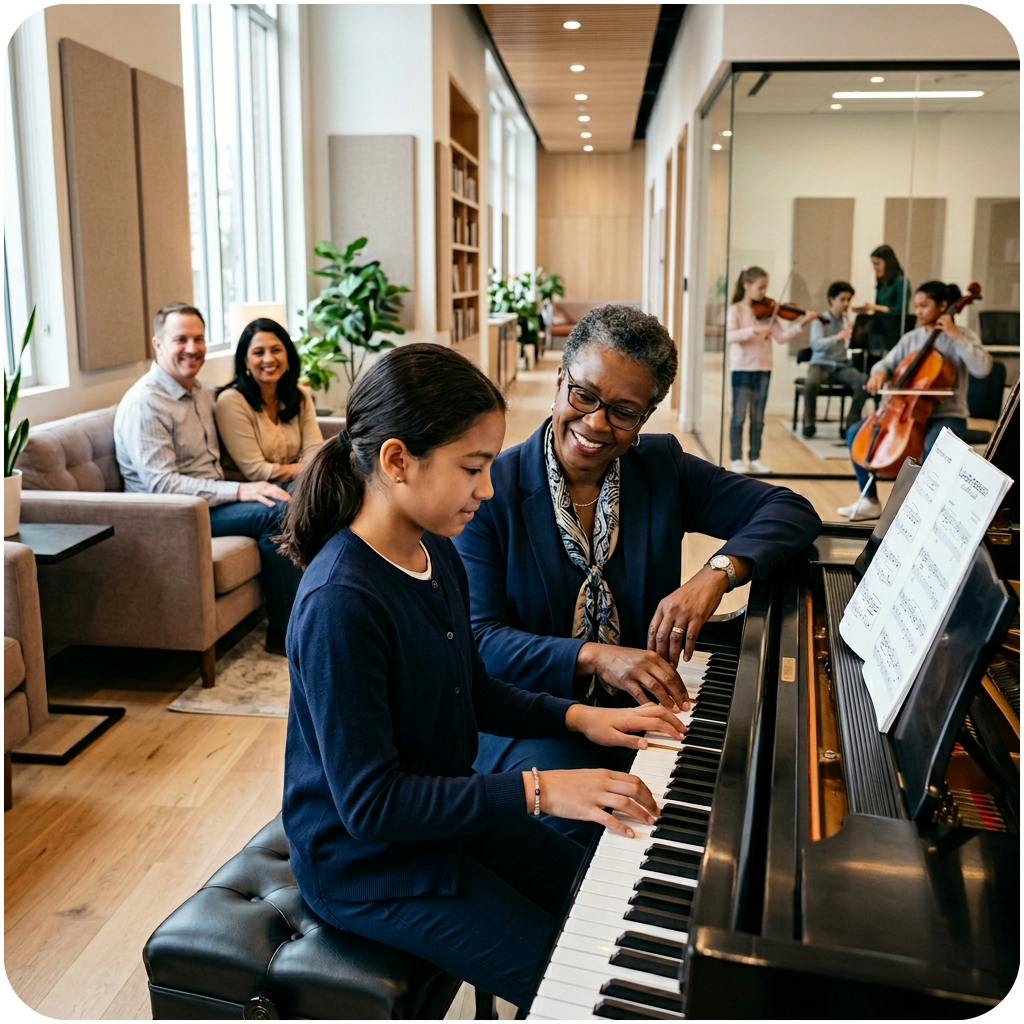
Music theory lessons Toronto provide a structured way for musicians to deepen their understanding of composition, harmony, and notation. Whether you are a beginner learning the fundamentals or an advanced player refining your skills, studying theory enhances both creativity and technical ability. Music is more than just an art—it’s a language musicians use to compose, perform, and communicate. Toronto boasts a thriving community, with dedicated instructors, specialized programs, and a wide range of educational institutions offering music theory classes. By immersing yourself in lessons that explore scales, chords, and rhythmic structures, you gain the knowledge needed to compose and perform with confidence.
Want to Play Better? Start With the Basics
Theory serves as the foundation for interpreting, analyzing, and creating music. It teaches how notes relate to one another, how harmony functions, and how rhythm and form bring music to life.
From notation and rhythm to harmony and scales, these concepts help artists gain a deeper understanding of the compositions they play. A structured program allows individuals to develop technical skills, strengthening their ability to improvise and compose original pieces.
When you learn music theory, you gain insight into:
- Composing your own songs
- Improvising with confidence
- Analyzing and understanding existing pieces
- Communicating with other artists
Many educators believe that formal music theory education enhances creativity rather than restricting it. By understanding structural elements such as chord progressions and counterpoint, students can confidently compose and perform across various genres.
Schools and Programs in Toronto
Toronto is a thriving hub for musical education, offering diverse learning opportunities for students at all levels. From structured music theory programs to one-on-one instruction, options abound for those looking to refine their skills.
Schools and Conservatories
Numerous music theory schools in Toronto provide comprehensive courses designed to take students from basic concepts to advanced theoretical applications. These institutions often integrate performance with theory, allowing students to develop both practical and analytical expertise.
Private Instruction
For students seeking personalized guidance, private lessons with a music theory teacher offer tailored instruction based on individual learning styles and goals. Many tutors blend practical exercises with theoretical discussions, ensuring students grasp key concepts in a relatable manner.
University and College Programs
Higher education institutions offer structured music theory programs that delve into advanced studies such as counterpoint, orchestration, and harmonic analysis. These courses provide a rigorous academic approach to theory, preparing students for careers in composition and l arrangement.
Each method caters to different learning styles and goals. Beginners often start with group sessions for a more affordable, supportive environment, while advanced learners may prefer tailored private sessions with seasoned music theory instructors.
Key Areas of Study
Understanding theory involves breaking it down into manageable sections. Here are some core aspects of study:
1. Notation and Reading Sheet Music
Learning to read sheet music is an essential skill that opens doors to performing and composing with confidence.
2. Scales and Intervals
Scales form the foundation of melodies, while intervals define the relationships between notes. Recognizing these patterns enhances comprehension.
3. Chords and Harmony
Harmony provides depth and emotion to compositions. Exploring chord structures enables artists to craft dynamic pieces.
4. Rhythm and Time Signatures
Rhythm influences flow, and mastering different time signatures allows artists to perform various styles fluently.
5. Ear Training
Developing an intuitive sense of pitch and harmony improves improvisation and composition skills. Many music theory teachers integrate ear-training exercises into their lessons.
How Long Does It Take to Learn Music Theory?
The time required to grasp theory depends on individual dedication and prior experience. Some students may understand basic principles within a few months, while others take years to master complex subjects.
Your pace depends on:
- Previous musical experience
- Practice frequency
- Learning method (self-study, private, or classroom)
A structured music theory program provides a guided approach to learning, helping students progress efficiently.
The important thing is consistency. With dedication, even the most intricate parts of theory become manageable.
Beginners often spend a few months familiarizing themselves with scales, chords, and notation. More advanced learners studying composition or jazz harmony may require additional time to refine their craft.
How to Practice Music Theory Effectively
To build proficiency, students should integrate theoretical exercises into their daily routine. Here are some helpful strategies:
- Use Theory Worksheets – Structured exercises help reinforce key concepts and provide consistent practice.
- Analyze Songs and Sheet Music – Studying chord progressions and structures in your favorite pieces shows how theory works in real compositions.
- Compose Original Pieces – Writing short melodies or harmonies encourages experimentation with scales, chords, and form.
- Use Apps and Flashcards – Digital tools are great for memorizing terms, intervals, and key signatures on the go.
- Practice Ear Training and Play Your Instrument – Developing your ear and applying theory through performance strengthens both comprehension and retention.
A mix of written exercises, real-world analysis, and listening drills works best for reinforcing concepts.
How to Understand Music Theory Better
Navigating theory can be challenging at first, but with the right strategies, it becomes much more approachable. Here are some effective ways to deepen your understanding:
- Learn from a Qualified Teacher – A knowledgeable music theory teacher can explain complex ideas clearly, tailor lessons to your needs, and answer questions as they arise.
- Break Concepts Into Smaller Parts – Focusing on one topic at a time prevents overwhelm and allows for more focused learning.
- Reinforce and Revisit – Regularly reviewing earlier material strengthens your foundation and helps connect new concepts more easily.
- Use Visual Aids – Diagrams, colors, and charts can help map out relationships between notes, chords, and scales, making theory more digestible.
- Apply Theory to Your Playing – Integrating what you learn into your instrument practice makes abstract ideas more tangible and intuitive.
- Collaborate and Engage – Joining a community or studying with peers provides opportunities for discussion, feedback, and shared insight.
By approaching theory from multiple angles—visual, analytical, practical, and social—you’ll start to see how the pieces fit together, making learning more engaging and effective.
Is Music Theory Right for You?
Ask yourself:
- Do you want to write music?
- Are you looking to pass an exam?
- Do you wish to understand your instrument better?
- Do you want to analyze your favorite songs?
If you answered yes to any of these, pursuing a structured course can significantly accelerate your progress. Whether you prefer learning at a school or taking private lessons, there’s a flexible option to match your goals and learning style.
Toronto offers a rich variety of opportunities—from private studios to community programs and professional instruction—making it an ideal place to build your theoretical foundation. Whether you’re just starting out or preparing for an advanced exam, music theory lessons Toronto can provide the personalized guidance and practical tools you need to grow as a confident, well-rounded musician.Need help finding the right program or music theory instructor in Toronto? Drop a comment below or contact us, and we’ll help connect you with the best options for your goals and schedule!