
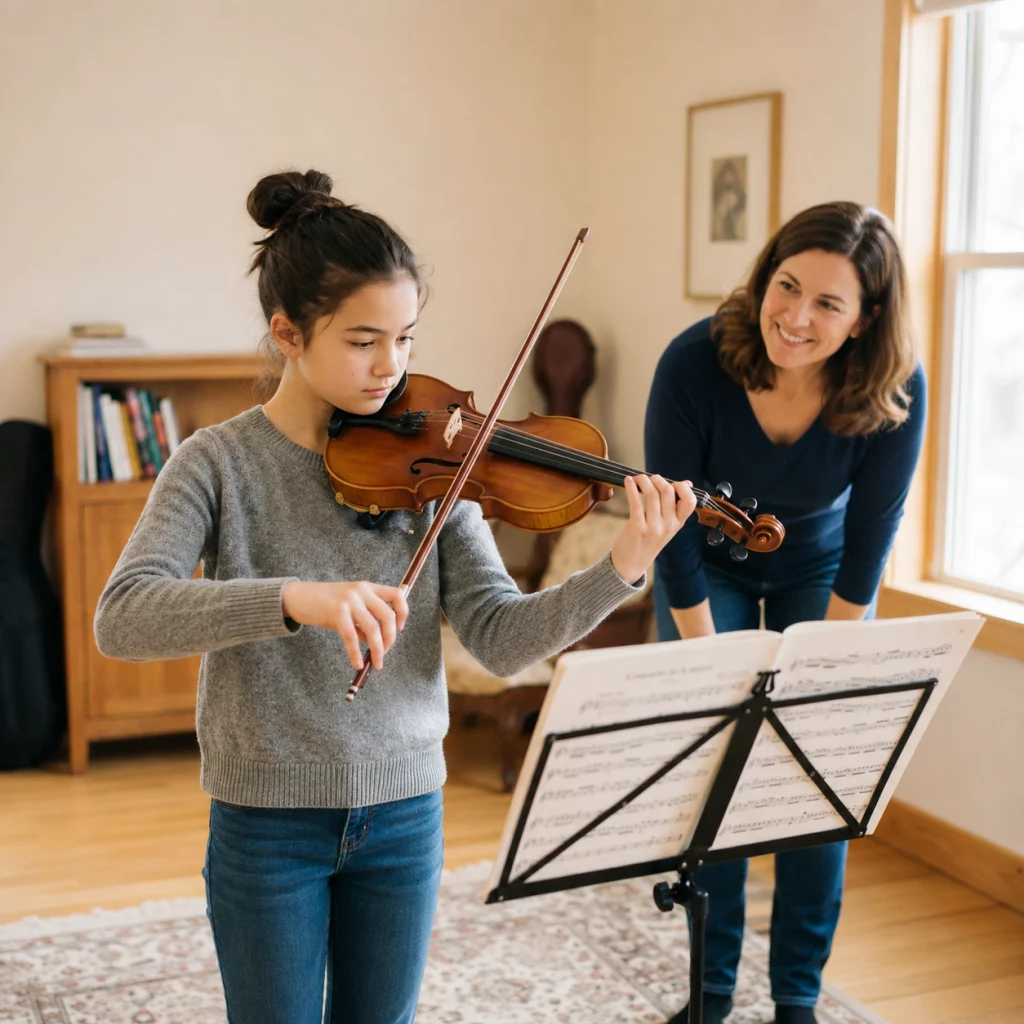
Learning an instrument is an exciting journey, but like any worthwhile skill, it comes with challenges. Nearly every music student experiences moments of frustration or loses enthusiasm at some point. Understanding music lesson motivation can help parents support their children through these challenges and build habits that lead to long-term success.
The good news is that these moments are completely normal. In fact, after nearly 90 years of teaching students of all ages, Ontario Conservatory of Music (OCOM) has observed that most children who continue with music education have encountered periods when they questioned whether they wanted to continue. The difference is rarely natural talent. More often, it comes down to realistic expectations, consistent routines, supportive parents, and the right learning environment.
If your child has started to lose interest—or you’re hoping to prevent that from happening—understanding the most common reasons students quit can help you keep their musical journey moving in a positive direction.
Talent Isn’t Usually the Reason Students Quit
Many parents worry that their child simply “isn’t musical.” Fortunately, that is rarely the issue.
Learning music is much like learning a new language. At first, everything feels unfamiliar. Students are learning how to read notation, develop coordination, recognize rhythm, and train their ears—all at the same time. Progress often feels slow because many important skills are developing beneath the surface.
Over the years, OCOM has found that students who succeed long-term are not necessarily the most naturally gifted. Instead, they are often the students who continue practicing through the early stages when progress feels less obvious.
Consistency almost always beats talent over time.
Unrealistic Expectations Can Lead to Frustration
One of the most common reasons students become discouraged is that they expect rapid improvement.
Children often compare themselves to:
- Older siblings
- Friends who have been playing longer
- Videos of experienced performers online
It’s easy to forget that every accomplished musician once struggled through beginner lessons.
Progress Isn’t Always Easy to See
Unlike school subjects where a test may show immediate improvement, musical growth often happens gradually.
Parents may not notice:
- Better rhythm
- Improved posture
- Stronger finger independence
- More confident reading skills
- Increased musical expression
However, experienced teachers often recognize these improvements long before families do.
Celebrating these smaller milestones helps children appreciate that they are making steady progress even when they aren’t yet playing advanced pieces. If you’re wondering how much practice is actually appropriate, read our article on How Much Should Children Practice Piano?.
Overscheduling Can Drain Motivation
Today’s children are busier than ever.
Many families are balancing:
- Sports
- Dance
- Homework
- Tutoring
- Clubs
- Family activities
- Social commitments
Music lessons sometimes become another item on an already crowded schedule.
Often, children aren’t quitting because they dislike music. They’re simply exhausted.
Quality Matters More Than Quantity
Parents sometimes believe every practice session needs to last an hour.
Fortunately, that’s rarely necessary for beginners.
Short, focused practice sessions are often far more productive than long sessions where students lose concentration.
Even 15 to 20 minutes of consistent daily practice can produce excellent results when students remain engaged.
Music Lesson Motivation Starts with Consistent Habits
One of the biggest misconceptions about learning music is that successful students are always motivated.
They’re not.
Professional musicians have days when they don’t feel like practicing. Experienced performers encounter difficult pieces that require patience. Every musician experiences periods where improvement seems slower than expected.
The students who continue making progress usually rely less on motivation and more on routine.
Parents can help build that routine by:
- Practicing at the same time each day.
- Keeping the instrument easily accessible.
- Encouraging consistency instead of perfection.
- Praising effort rather than only results.
- Keeping practice sessions positive.
A reliable routine removes the daily decision about whether to practice. It simply becomes part of the family’s schedule.
Many Students Want to Quit Right Before They Improve
One interesting pattern experienced music educators often observe is that children sometimes become most frustrated immediately before a significant breakthrough.
This can happen when a student is:
- Learning to read music independently.
- Coordinating both hands on the piano.
- Developing proper bow control on the violin.
- Learning more advanced rhythms.
- Moving beyond beginner-level pieces.
These transitions are challenging because students suddenly become aware of how much there is still to learn. Ironically, that awareness often means they are developing greater musical understanding.
Parents who recognize this stage can provide encouragement rather than assuming something has gone wrong.
Sometimes the most important lesson isn’t the piece itself—it’s learning that persistence leads to progress.
The Right Teacher Makes a Significant Difference
Every child learns differently.
Some students thrive with gentle encouragement. Others enjoy structured challenges and ambitious goals.
A strong teacher does far more than explain musical concepts. They also understand how to keep students engaged, adjust lessons to suit different learning styles, and celebrate progress at appropriate moments.
Over decades of teaching, OCOM has found that positive teacher-student relationships often become one of the strongest predictors of long-term success.
A good teacher helps students enjoy the process of learning—not just the destination.
If you’re just beginning your search for lessons, our Getting Started guide explains what families can expect during the enrollment process.
How Parents Build Music Lesson Motivation
Many parents worry they won’t be able to help because they don’t play an instrument themselves.
Fortunately, musical knowledge isn’t required.
Children benefit most when parents show genuine interest.
Simple questions like:
- “What did you learn today?”
- “Can you play that song for me?”
- “What was the most fun part of today’s lesson?”
can reinforce that music is an important part of their education.
Parents also help by:
- Attending recitals.
- Celebrating milestones.
- Encouraging regular practice.
- Avoiding negative comparisons.
- Recognizing effort instead of expecting perfection.
Children often mirror the attitudes they see at home. When parents remain positive and supportive, students are more likely to persevere through difficult periods.
Should Parents Ever Let a Child Quit?
This is one of the most common questions families ask.
The answer isn’t always simple.
Sometimes continuing with lessons is the right decision.
Other times, making a change may better support a child’s long-term interest in music.
For example, it may be worth reconsidering lessons if:
- The child has developed a genuine passion for a different instrument.
- Family schedules have changed significantly.
- Learning goals have shifted.
- A different teaching approach would be a better fit.
However, temporary frustration is different from genuine loss of interest.
Children often want to quit after encountering a challenging piece or during a busy period at school. Those feelings usually pass with encouragement and a little patience.
Rather than making an immediate decision, parents may find it helpful to speak with their child’s teacher first. Experienced instructors can often distinguish between a temporary setback and a more significant concern.
Music Education Is a Long-Term Investment
Learning music isn’t about becoming perfect as quickly as possible.
It’s about developing discipline, creativity, confidence, patience, and a lifelong appreciation for music.
Every student experiences moments when progress feels slow. Every musician encounters challenges that require persistence.
After nearly 90 years of teaching, OCOM has seen that the students who continue learning aren’t necessarily the ones with the greatest natural ability. They’re the ones supported by realistic expectations, consistent routines, encouraging teachers, and families who understand that meaningful progress takes time.
If your child is feeling discouraged, don’t assume their musical journey has reached its end. Often, with a little encouragement and the right guidance, those difficult moments become the very experiences that help students grow the most.
Whether your child is just beginning or has been taking lessons for several years, maintaining music lesson motivation starts with patience, consistency, and remembering that every accomplished musician was once a beginner too. Whether you’re interested in Piano Lessons, Guitar Lessons, Violin Lessons, or Vocal Training, the goal is the same: helping students build skills and confidence that last a lifetime.
Frequently Asked Questions
Is it normal for children to want to quit music lessons?
Yes. Many students experience periods where they feel frustrated or lose motivation. These moments are a normal part of learning a complex skill and don’t necessarily mean they should stop taking lessons.
What should I do if my child refuses to practice?
Start by looking for the reason behind the resistance. Fatigue, busy schedules, or difficult pieces are common causes. Shorter practice sessions, a consistent routine, and encouragement often help students regain momentum. You may also find our article, How Much Should Children Practice Piano?, helpful.
How long should parents encourage children before allowing them to quit?
Every situation is different. Rather than making an immediate decision, talk with your child’s teacher. They can often determine whether your child is experiencing a temporary challenge or whether a change in goals or teaching approach might be beneficial.
Can changing instruments help keep students interested?
Sometimes. A child who loses interest in one instrument may become highly motivated by another. Ontario Conservatory of Music offers instruction in Piano, Guitar, Violin, Voice, and other programs, allowing students to explore the instrument that best suits their interests.
Does my child need natural musical talent to succeed?
Not at all. While every student learns differently, consistent practice, good instruction, and supportive parents generally have a much greater impact on long-term success than natural talent alone.
One of the best ways to keep students motivated is to let them see what’s possible. Visit OCOM’s YouTube channel to watch performances from students at various stages of their musical journey.