
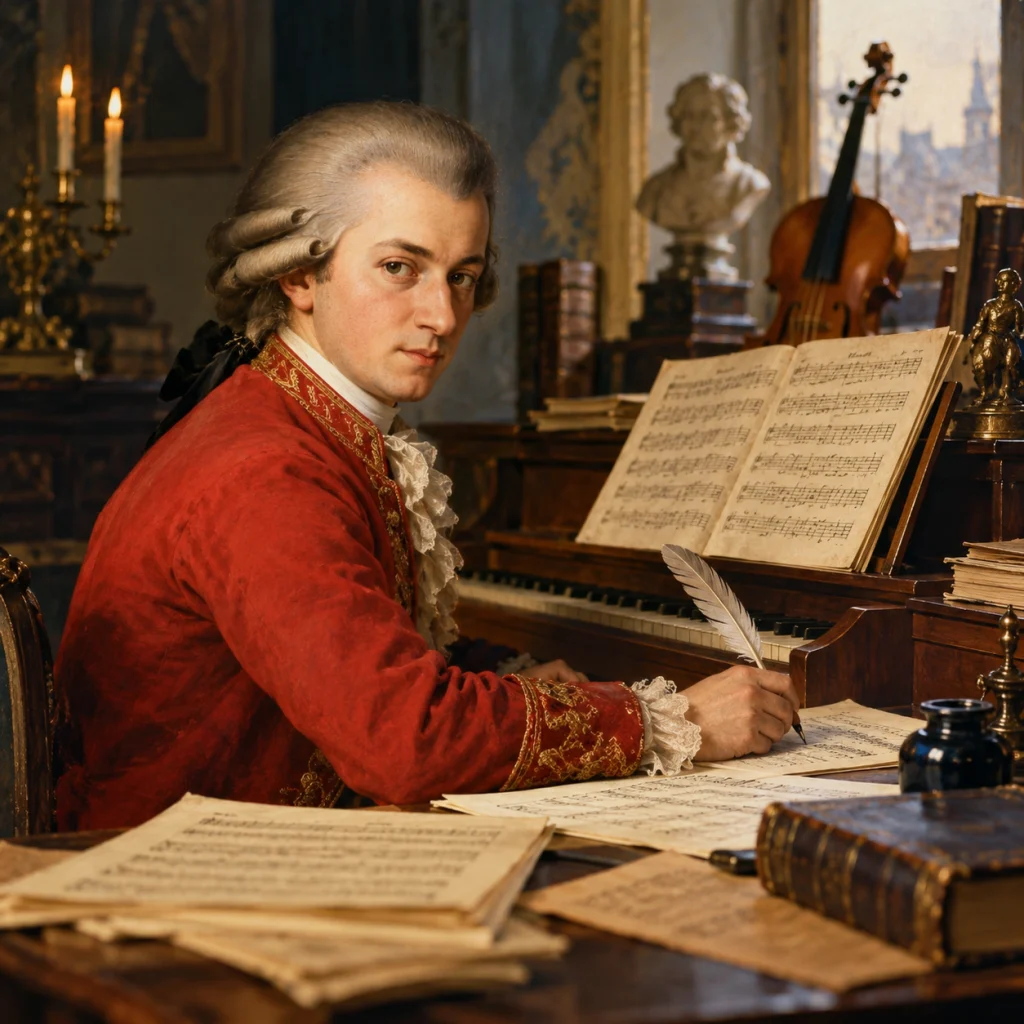
When a student opens a piece of music, the notes on the page tell only part of the story.
Who wrote it? When was it written? What instruments existed at the time? What did audiences expect music to sound like? Why does a piece by Bach sound so different from one by Beethoven, Chopin or a contemporary composer?
These aren’t just interesting facts. Music history for students can provide context for the music they are learning and help them understand how musical styles, instruments and ideas have changed over time.
For young musicians, history does not need to mean memorizing long lists of composers and dates. Instead, it can help answer a much more useful question: Why does this music sound the way it does?
When music history is connected to instrumental study, theory, harmony and performance, students can begin to see individual pieces as part of a much larger musical story.
Music Was Created in a Time and Place
Every piece of music comes from somewhere.
A composer worked within a particular period, culture and musical environment. The instruments available, popular musical forms and expectations of performers all influenced what composers wrote.
That context can be difficult to see when students encounter pieces individually.
A young musician might learn a Baroque piece one month, a Romantic composition the next and something written within the last few decades after that. Without historical context, these can simply appear to be three pieces that happen to sound different.
Music history helps explain why.
As students learn about different periods, they begin to recognize that musical styles evolved. Composers built upon existing ideas, challenged conventions and experimented with new approaches.
The music on the page becomes part of an ongoing story rather than an isolated exercise.
Musical Periods Help Students Recognize Differences
Students do not need an advanced understanding of music history to begin recognizing broad differences between musical periods.
The Baroque, Classical and Romantic periods, for example, each developed recognizable musical characteristics. Later periods introduced still more approaches, while jazz, popular music and musical traditions from around the world contributed different sounds, structures and ideas.
Learning about these differences can give students another way to organize what they hear and play.
Instead of thinking only:
“This piece sounds different from the last one.”
A student can begin asking:
“What makes it different?”
Perhaps the structure has changed. Maybe the composer uses harmony differently. Perhaps performers were expected to approach expression or ornamentation in another way.
Those questions encourage students to listen more carefully.
Over time, students may begin recognizing characteristics before anyone tells them when a piece was written. That is an important transition from simply receiving information to applying musical knowledge.
Composers Become More Than Names on a Page
For a beginning student, a composer’s name can be little more than another piece of information printed above the first line of music.
Music history can give that name meaning.
Students can learn when composers lived, what influenced them, what kinds of music they wrote and how their work related to the musical world around them.
This does not require turning every instrumental lesson into a history lecture.
Even a small amount of context can change how students encounter a composition.
Knowing that two composers lived in very different periods can help explain why their music follows different conventions. Learning that a composer wrote for particular instruments or performers can provide insight into the music itself.
Students can also begin to understand that composers were working musicians rather than distant historical figures whose sole purpose was to appear in music books centuries later.
Their music reflected the opportunities, limitations and ideas of their time.
Instruments Have a History Too
The history of music is also the history of musical instruments.
Many instruments have changed considerably over time. Their construction, range, volume and capabilities developed alongside the music written for them.
That can be fascinating for students.
A modern piano, for example, gives a performer capabilities that were not available on earlier keyboard instruments. Changes in instrument design affected what composers could write and what performers could do.
Similar developments occurred across many instrument families.
Understanding that relationship can help students recognize an important idea: music does not evolve independently from the tools musicians use to create it.
New instruments can make new sounds possible. Improvements to existing instruments can expand what performers can accomplish. Composers can then explore those possibilities.
Technology and music have influenced one another for centuries.
Music History Can Improve Musical Interpretation
Playing the correct notes is an important part of learning a piece, but performance involves more than accuracy.
Students eventually begin making decisions about phrasing, articulation, dynamics, tempo and expression.
Historical context can help inform those decisions.
A student who knows something about the period in which a composition was written has additional information available when thinking about how that music might be approached.
This doesn’t mean there is always one historically correct way to perform a piece. Musical interpretation still involves judgement and individual expression.
However, informed choices are different from arbitrary ones.
History gives students another source of information they can combine with technique, theory, teacher guidance and careful listening.
The question gradually changes from “Can I play these notes?” to “How should I communicate this music?”
History, Theory and Harmony Work Together
Music education becomes particularly powerful when subjects stop feeling like separate courses.
Theory helps students understand the building blocks of music.
Harmony helps explain relationships between notes and chords.
History shows how composers used—and changed—those musical ideas over time.
A concept learned in theory may suddenly become much more meaningful when a student recognizes it in a piece they are performing. Likewise, a historical change in musical style may make more sense when the student understands the theoretical or harmonic ideas involved.
These connections are one reason a well-rounded music education involves more than practical instrumental instruction.
Students aren’t simply collecting unrelated facts. They are gradually building a framework for understanding music.
As that framework develops, new information has somewhere to fit.
Music History Expands What Students Hear
Students naturally develop preferences.
A young musician may be particularly interested in one instrument, composer, genre or style. There is nothing wrong with that. Enjoying music is one of the reasons people choose to study it.
However, music education can also introduce students to things they might never encounter on their own.
History provides an opportunity to explore music from different periods and traditions and to hear how musical ideas have changed.
That exposure can broaden a student’s frame of reference.
A student doesn’t have to love every style of music they study. Understanding why a musical tradition matters is different from choosing it as a personal favourite.
The important thing is exposure.
The more music students encounter, the larger their musical vocabulary can become.
Music History Shows That Music Is Always Changing
It is easy to think of historical music as something fixed—music that belongs to the past and has little connection with what students hear today.
In reality, music has always changed.
Musicians borrow ideas, develop them, reject them and rediscover them. Instruments evolve. Technology creates new possibilities. Audiences change. Musical styles that were once new eventually become established traditions.
Looking at music historically helps students see that change is normal.
The music they hear today also comes from somewhere.
Contemporary genres did not appear independently of what came before them. Musical ideas can travel across generations, cultures and styles, sometimes in obvious ways and sometimes less visibly.
For students, recognizing those connections can make both older and newer music more interesting.
Music history isn’t only about understanding the past. It can also help explain the present.
History Can Encourage Curiosity Beyond the Lesson
One of the most valuable things education can do is give students reasons to ask more questions.
A student might encounter an unfamiliar composer and want to hear another piece. They may wonder what an older instrument sounded like, why a particular musical form became popular or how musicians performed before recordings existed.
One answer often leads to another question.
That curiosity can encourage students to listen independently, explore unfamiliar repertoire and make connections beyond what can fit into a weekly lesson.
Teachers cannot introduce students to every composer, period, genre or musical tradition.
They can, however, help students develop the curiosity and knowledge needed to continue exploring on their own.
That is a much more lasting educational goal.
Music History Is Part of a Well-Rounded Music Education
At Ontario Conservatory of Music, we have taught generations of students since 1939. Over that time, musical styles, technology and even the ways students encounter music have changed dramatically.
The value of understanding music, however, extends beyond any particular era or instrument.
Practical instruction teaches students how to make music. Theory and harmony help them understand its structure. Performance gives them opportunities to communicate it. Music history adds another important dimension by showing students where musical ideas came from and how they developed.
These subjects reinforce one another.
A student learning a composition can consider its notes, technique, structure, historical context and interpretation as parts of the same musical experience.
That is very different from simply learning one song after another.
Helping Students See the Bigger Musical Picture
A young student does not need to memorize centuries of musical history before they can benefit from it.
It can begin with simple questions.
Who wrote this piece?
When did they live?
What was music like at the time?
What makes this piece different from something written before or after it?
Why might the composer have made these musical choices?
As students progress, the answers become more detailed and the connections become richer.
Ultimately, music history for students is about perspective. It helps young musicians understand that every piece they learn belongs to a much larger tradition of people creating, performing, changing and sharing music.
Learning the notes allows students to play the music.
Understanding where that music came from can help them understand what they are playing.
Frequently Asked Questions
Why is music history important for music students?
Music history gives students context for the pieces they learn. It can help explain differences between musical periods, composers and styles while showing how music has developed over time. When combined with practical lessons, theory and harmony, historical knowledge can help students make connections between what they play and the larger musical traditions behind it.
Do young children need to study music history?
Music history can be introduced at a level appropriate to the student’s age and experience. Younger students do not need to memorize dates or study complex historical material. Simple discussions about a composer, instrument or musical period can begin building context and curiosity while connecting naturally with the music they are already learning.
Can music history help students become better performers?
Historical knowledge can provide useful context when students make decisions about interpretation. Understanding when a piece was written, the musical conventions of the period and the instruments available to the composer can give students additional information to consider alongside technique, theory and teacher guidance.
How does music history connect with music theory?
Theory explains many of the structures and relationships found within music, while history helps students see how composers used and developed those ideas at different times. Studying both can help students understand not only how music is constructed but also how musical language has changed.
Does music history only cover classical music?
Classical music provides a substantial amount of material for historical study, but the history of music extends far beyond a single tradition. Musical styles, instruments and ideas have developed across cultures and periods. A broader understanding of music history can help students recognize relationships among many different forms of music.
Discover a Broader Approach to Music Education
Music history is one part of developing a deeper understanding of music. Explore Ontario Conservatory of Music programs and learn how practical instruction, theory, harmony, history and performance work together.
Explore OCOM Programs | Find an OCOM Location | Getting Started