
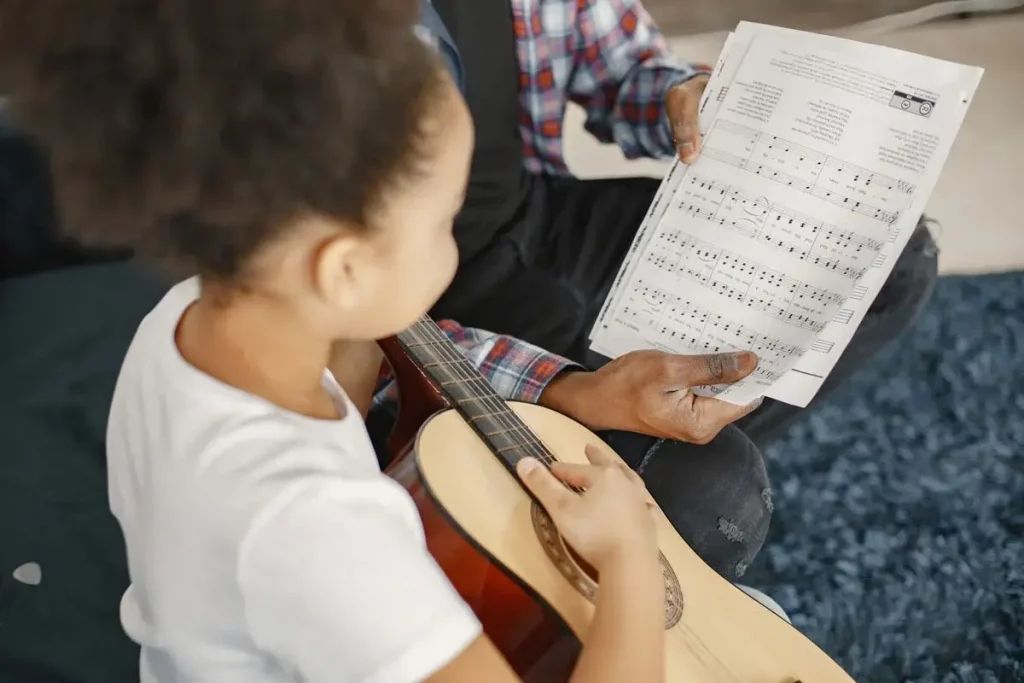
To help kids get the most out of their guitar classes, parents can play an essential role in supporting their child’s learning journey and making it an incredibly rewarding experience for them. When learning guitar, success requires more than just attending lessons. Children need the right support, structure, and motivation. Whether they’re beginners or already strumming away, parents and guardians play a crucial role in nurturing their musical growth.
Whether they’re learning for fun, to build their musical skills, or even to develop discipline, here are some key tips for parents to make the most out of guitar programs for children.
Help them set clear goals
One of the best ways to ensure kids stay engaged in guitar lessons is to define their learning goals early on. Setting realistic expectations and breaking them down into smaller, manageable tasks is crucial for maintaining motivation and seeing progress.
Encourage your child to think about:
- Why do they want to learn guitar – Do they want to play favorite songs, perform in a band, or compose music?
- Specific skill development – Learning basic chords, mastering fingerpicking, or improvising solos.
- Performance goals – Do they simply want to play for friends, or do they aim to participate in a recital, or record a song?
Helping kids set small, achievable milestones will provide direction for both your child and the teacher and will keep them motivated as they progress.
Help them choose the right guitar
The type of guitar your child uses can significantly impact their learning experience. Here’s how to ensure they have the right instrument:
- Size matters – Younger children should have a guitar suited to their height and hands. Consider half-sized or three-quarter guitars for small hands.
- Acoustic vs. Electric – Acoustic guitars are great for beginners due to their simplicity, while electric guitars provide versatility and are easier to play.
- Comfort is key – Ensure the guitar is lightweight and has a comfortable neck to prevent frustration.
A well-chosen guitar will help your child enjoy their lessons without unnecessary difficulties.
Create a positive practice environment at home
A supportive environment plays a crucial role in helping kids stay consistent with practice. Here’s how to make practicing an enjoyable experience:
- Provide a dedicated practice space – Set up a quiet, distraction-free area with good lighting and comfortable seating.
- Encourage fun practice routines – Let them play their favorite songs rather than just drills.
- Reward effort, not perfection – Celebrate small achievements rather than focusing on mistakes.
- Keep sessions short and engaging – 15–30 minutes of focused practice is better than forcing long, stressful sessions.
When kids associate practice with enjoyment instead of pressure, they are more likely to stay committed.
Encourage consistent practice without pressure
Guitar classes for children require consistent practice. A well-structured routine will help your child develop discipline and make practice a natural part of their day. While practicing regularly is crucial, forcing kids into rigid practice schedules can lead to burnout. Use these approaches instead:
- Make it part of their routine – Encourage them to practice at a set time each day. Try to create a consistent schedule, ideally after school or before dinner, when they’re more likely to have free time.
- Incorporate games – Use games and fun challenges to keep things engaging. Create a home challenge that’s attainable, for example, “practice two different bars daily for one week.” Then, give a prize once the challenge is achieved.
- Let them explore freely – Allow time for them to experiment with different sounds and techniques. Try guitar-learning apps for experimenting with new sounds and rhythms.
- Break it up into manageable sections – Instead of practicing for an hour straight, they can work on a few skills for 5-10 minutes each.
Balance is key—structured practice helps them improve, but playfulness fosters creativity.
Help them build finger strength and dexterity
One common challenge in children’s guitar programs is developing finger strength. Playing the guitar requires pressing down on the strings, which can be tough for young learners. Their fingers may get sore or tired quickly, making it hard to play for extended periods of time. Over time, with practice, their fingers will naturally strengthen, but it’s important to start with exercises that gradually build up strength and dexterity.
Here’s how to help:
- Encourage finger exercises – Stretching fingers before playing can prevent discomfort.
- Start with simple chords – Avoid frustration by beginning with easy-to-play chords like C, G, D, A, and E.
- Use thinner strings – Light gauge strings are easier to press down for beginners.
- Let them take breaks – If their fingers hurt, encourage short rests to prevent fatigue.
With gradual progress, the muscles in the fingers become stronger, making playing more effortless over time.
Encourage group learning and social engagement
Learning an instrument is more enjoyable when shared with others. Encourage your child to participate in group guitar lessons, jam sessions, or even music camps where they can meet other kids who play the same instrument. Peer learning not only keeps things fun but also fosters a sense of community and teamwork.
If your child enjoys social interaction, consider organizing small jam sessions with friends or family, which can motivate them to practice and try new things. This will allow them to feel connected to others who share a common interest and inspire them to improve their skills.
Help them engage with guitar outside of lessons
Whether your child is enrolled in private guitar lessons or group guitar classes, a great way to help kids get more out of their classes is to expose them to guitar-related activities beyond formal lessons:
- Attending live performances – Watching musicians perform inspires young children to continue learning.
- Listen to different genres – Introducing kids to blues, rock, jazz, or classical guitar styles broadens their musical interests.
- Join a music community – Local jam sessions or online forums help boost inspiration and creativity as they engage with other learners.
- Encourage creativity – Let them experiment with songwriting or creating their own melodies.
The more kids interact with music outside of lessons, the more invested they become in learning.
Support them through challenges
Every child faces obstacles when learning an instrument, whether struggling with technique or feeling discouraged. As a parent or guardian, you can help by:
- Reassuring them that mistakes are normal – Every musician experiences difficulty, but overcoming challenges leads to growth.
- Helping them stay patient – Progress takes time, and some skills require more practice.
- Breaking down difficult sections – Instead of tackling everything at once, help them focus on small improvements.
- Encouraging a growth mindset – Reinforce the idea that with persistence, they will improve over time.
A supportive approach keeps children motivated and resilient in their musical journey.
Choosing the right guitar instructor for them
A skilled, nurturing instructor can make a significant difference in how engaged a child is with their lessons. Here’s what to look for when choosing a guitar teacher:
- Patience and encouragement – Teachers should make learning fun, not frustrating.
- Experience teaching kids – Some instructors specialize in teaching young learners.
- Interactive teaching style – Lessons should include engaging activities rather than just theory.
- Good communication with parents – A great teacher keeps parents updated on their child’s progress.
Staying in communication with your child’s guitar teacher is essential to understand how they’re progressing and to address any issues they might be facing. Ask for feedback on what your child is doing well and where they can improve. This helps you reinforce the positive aspects of the lessons at home and ensures that your child gets the necessary support to succeed.
Celebrate their progress
Music should always be enjoyable, so recognizing progress is crucial for maintaining enthusiasm. Here’s how to celebrate achievements:
- Recording progress – Watching their own improvement keeps kids motivated.
- Organizing mini performances – Playing for family and friends builds confidence.
- Setting fun challenges – Encourage them to master a new song or technique each month.
- Offering incentives – Small rewards for commitment keep learning exciting.
Positive reinforcement boosts confidence and makes lessons more rewarding.
Find Guitar Lessons for Kids Near Me
A child’s guitar journey should be filled with fun, creativity, and encouragement. With the right approach, their musical potential can flourish, and they’ll cherish the joy of playing guitar for years to come. By setting clear goals, encouraging consistent yet enjoyable practice, and supporting them through challenges, parents can help children get the most out of their guitar classes and ensure their kids not only improve but develop a lifelong love for music.