
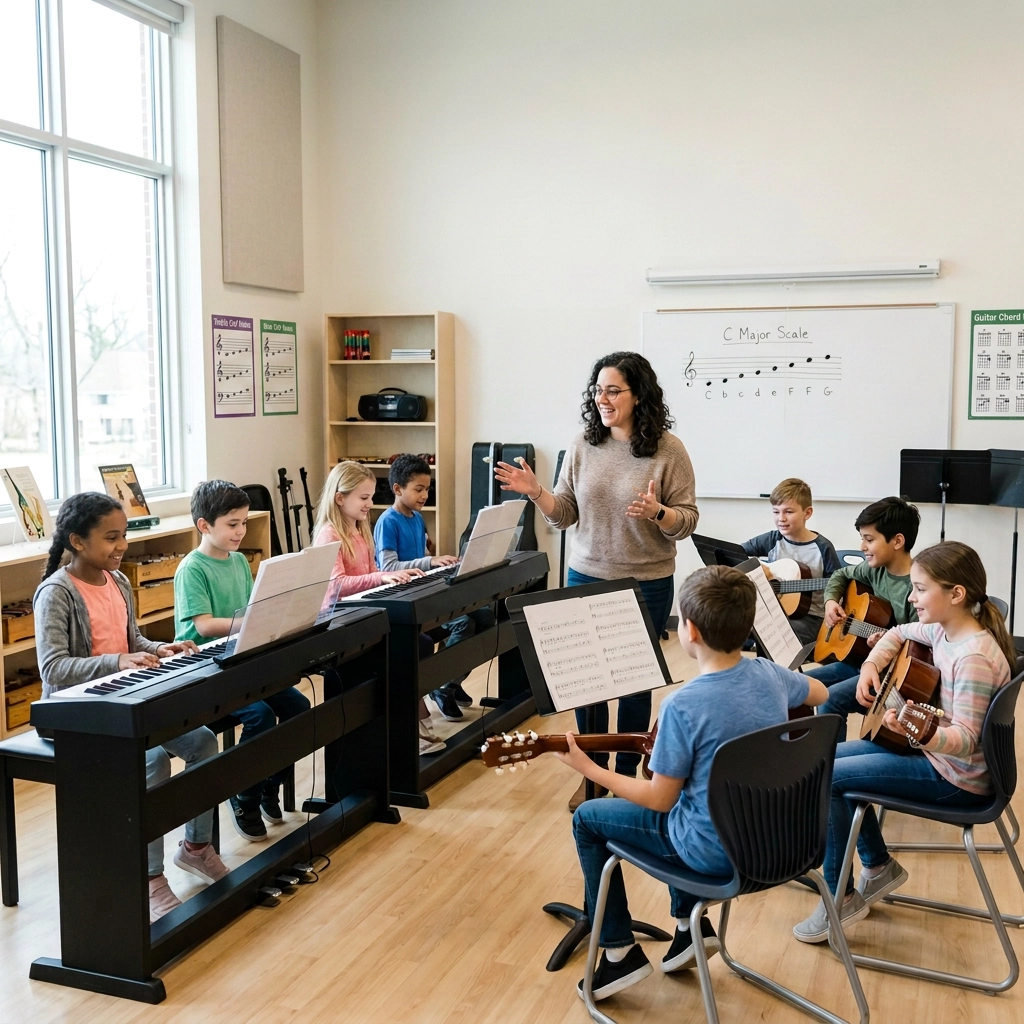
One of the first questions parents ask when exploring music lessons is whether their child should begin with piano or guitar. It’s also a common question among teens and adults who want to learn an instrument for the first time. If you’re comparing piano vs guitar, you’ll quickly discover that both instruments offer unique advantages, and neither is automatically the “right” choice for every student.
After nearly 90 years of teaching students of all ages, Ontario Conservatory of Music has seen beginners succeed with both piano and guitar. While each instrument presents different challenges, the students who make the greatest long-term progress usually have one thing in common: they enjoy playing the instrument they’ve chosen and remain consistent with their lessons and practice.
Before making a decision, it’s worth understanding how the two instruments compare in terms of learning curve, practice expectations, cost, and long-term musical development.
Why Parents Compare Piano and Guitar
For many families, piano and guitar are the two most accessible instruments. Both are versatile, widely taught, and suitable for beginners.
Parents often consider factors such as:
- Which instrument is easier to learn
- Which keeps children motivated
- Practice time requirements
- Overall cost
- Musical styles their child enjoys
- Long-term educational value
These are all important considerations, but there isn’t a universal answer. The best instrument depends on the individual student.
Piano vs. Guitar Learning Curve
One of the biggest differences between the two instruments is how beginners experience early progress.
| Feature | Piano | Guitar |
|---|---|---|
| Producing the first notes | Easy | Moderate |
| Reading music | Excellent foundation | Learned alongside chords |
| Finger strength required | Low | Moderate |
| Early song playing | Simple melodies | Basic chords |
| Portability | Low | High |
| Supports music theory | Excellent | Excellent |
| Popular genres | Classical, Jazz, Pop | Rock, Folk, Country, Pop |
| Suitable for young children | Excellent | Excellent with proper sizing |
Learning Piano
Many educators consider piano an excellent starting instrument because it presents music visually. Every key represents one note, making relationships between notes easier to understand.
Students also produce a clear sound immediately. Unlike many other instruments, beginners don’t need to develop a specialized technique simply to create a pleasant tone.
Early piano lessons typically focus on:
- Reading music
- Rhythm
- Hand coordination
- Finger independence
- Musical expression
Because the keyboard layout is logical and consistent, many students develop a strong understanding of musical fundamentals that transfers well to other instruments later.
Learning Guitar
Guitar offers different rewards.
Many students are drawn to guitar because they enjoy popular music, rock, folk, or acoustic styles. Playing recognizable songs can be highly motivating.
However, beginners often encounter a steeper physical learning curve.
Common early challenges include:
- Sore fingertips
- Building finger strength
- Forming chord shapes
- Coordinating both hands
- Switching between chords smoothly
These challenges are temporary, but they can require patience during the first several weeks of lessons.
Which Instrument Is Easier for Young Children?
For younger students, piano often provides a more straightforward introduction to music.
Children can focus on learning rhythm, melody, and note reading without also needing to press strings firmly against frets or stretch their fingers into chord positions.
That doesn’t mean guitar isn’t appropriate for children. Many young students successfully learn guitar with the right instructor and an appropriately sized instrument.
At Ontario Conservatory of Music, the decision usually comes down to several factors:
- Age
- Hand size
- Attention span
- Musical interests
- Individual goals
Some children naturally gravitate toward the piano, while others immediately connect with the guitar. Both choices can lead to long-term musical success.
Beginner Challenges
| Piano | Guitar |
|---|---|
| 🎹 Reading notes | 🎸 Learning chords |
| 👋 Hand coordination | 💪 Finger strength |
| 🎵 Rhythm | 🎵 Rhythm |
| 🎼 Music reading | 🎼 Music reading |
Practice Expectations
Regardless of which instrument a student chooses, regular practice matters far more than marathon practice sessions.
A typical beginner benefits from:
- Short, consistent practice sessions
- Clear weekly goals
- Guidance from an instructor
- Positive encouragement at home
Many parents are surprised to learn that practicing for 15–20 minutes most days is often more effective than one long session every weekend.
Both piano and guitar require repetition to build muscle memory, but the specific skills being developed differ.
Piano students spend more time reading music and coordinating both hands independently.
Guitar students often devote additional time to chord transitions, finger placement, and developing hand strength.
Consistency almost always produces better results than natural talent alone.
Musical Styles and Long-Term Goals
Another important consideration is the type of music the student hopes to play.
Piano
Piano is particularly well suited for students interested in:
- Classical music
- Contemporary piano
- Jazz
- Composition
- Music theory
- Accompaniment
Because the keyboard clearly displays musical relationships, piano is also an excellent foundation for understanding harmony and music theory.
Guitar
Guitar appeals to students who enjoy:
- Rock
- Pop
- Country
- Blues
- Folk
- Singer-songwriter styles
Many students enjoy accompanying themselves while singing, making guitar an attractive option for those interested in performance.
Neither instrument limits future opportunities. Many accomplished musicians eventually learn both.
Cost Considerations
Parents often assume guitar is automatically the less expensive choice.
While entry-level guitars may cost less than a piano, there are several factors to consider.
A quality digital piano requires a larger initial investment but offers:
- Consistent tuning
- Weighted keys
- Headphone capability
- Minimal maintenance
Acoustic guitars are generally affordable, but students may eventually require accessories such as:
- Cases
- Tuners
- Replacement strings
- Capos
- Picks
Over time, the difference in overall cost is often smaller than many families expect.
Piano vs Guitar for Adult Beginners
Adults frequently ask whether they’re “too old” to begin learning an instrument.
The answer is no.
Many adult students begin lessons later in life and make excellent progress because they are highly motivated and practice consistently.
Adults often choose piano because:
- It provides a structured learning path.
- Reading music becomes easier to visualize.
- Progress is measurable.
Others choose guitar because:
- They enjoy contemporary music.
- It’s portable.
- They want to accompany singing or play with friends.
The best choice depends on what inspires the student to continue learning.
What Nearly 90 Years of Teaching Has Shown Us
One lesson stands out after decades of working with thousands of students.
The instrument itself rarely determines success.
Instead, successful students tend to:
- Attend lessons consistently.
- Practice regularly.
- Enjoy making music.
- Set realistic goals.
- Receive encouragement from family.
- Learn from qualified instructors following a structured curriculum.
Parents sometimes spend weeks trying to determine the “perfect” instrument, but long-term commitment usually has a much greater impact than the initial choice.
Choosing the Right Instrument
If your child loves the sound of piano, start with piano.
If they constantly talk about playing guitar, begin with guitar.
If they’re genuinely undecided, consider arranging an introductory lesson to experience each instrument before committing.
At Ontario Conservatory of Music, instructors help families choose programs based on each student’s interests, goals, and learning style rather than recommending the same instrument for everyone.
The goal isn’t simply to learn an instrument—it’s to build a lifelong appreciation for music through quality music education.
Frequently Asked Questions
Is piano easier than guitar?
Many beginners find piano easier to start because producing a good sound is immediate and the keyboard layout is visually straightforward. Guitar often requires more finger strength and coordination during the first few weeks.
Which instrument should a six-year-old start with?
Many children begin successfully with piano, although guitar can also be an excellent choice when the instrument is properly sized and matches the child’s interests.
Can a student learn guitar after starting piano?
Absolutely. Many musicians begin with piano and later add guitar. The musical knowledge gained from piano often transfers well to other instruments.
Do adults learn piano or guitar faster?
Progress depends more on consistent practice than age or instrument. Motivated adults often advance quickly regardless of which instrument they choose.
Is it okay to switch instruments later?
Yes. Many students eventually explore multiple instruments. Learning one instrument builds musical skills that often make learning another easier.
Final Thoughts
When comparing piano vs guitar, there isn’t a single correct answer. Both instruments provide valuable musical experiences and can lead to years of enjoyment and personal growth.
The best instrument for beginners is usually the one that inspires them to keep learning.
If you’re still unsure which option is the best fit, Ontario Conservatory of Music can help you explore your choices and find a program that matches your goals.