
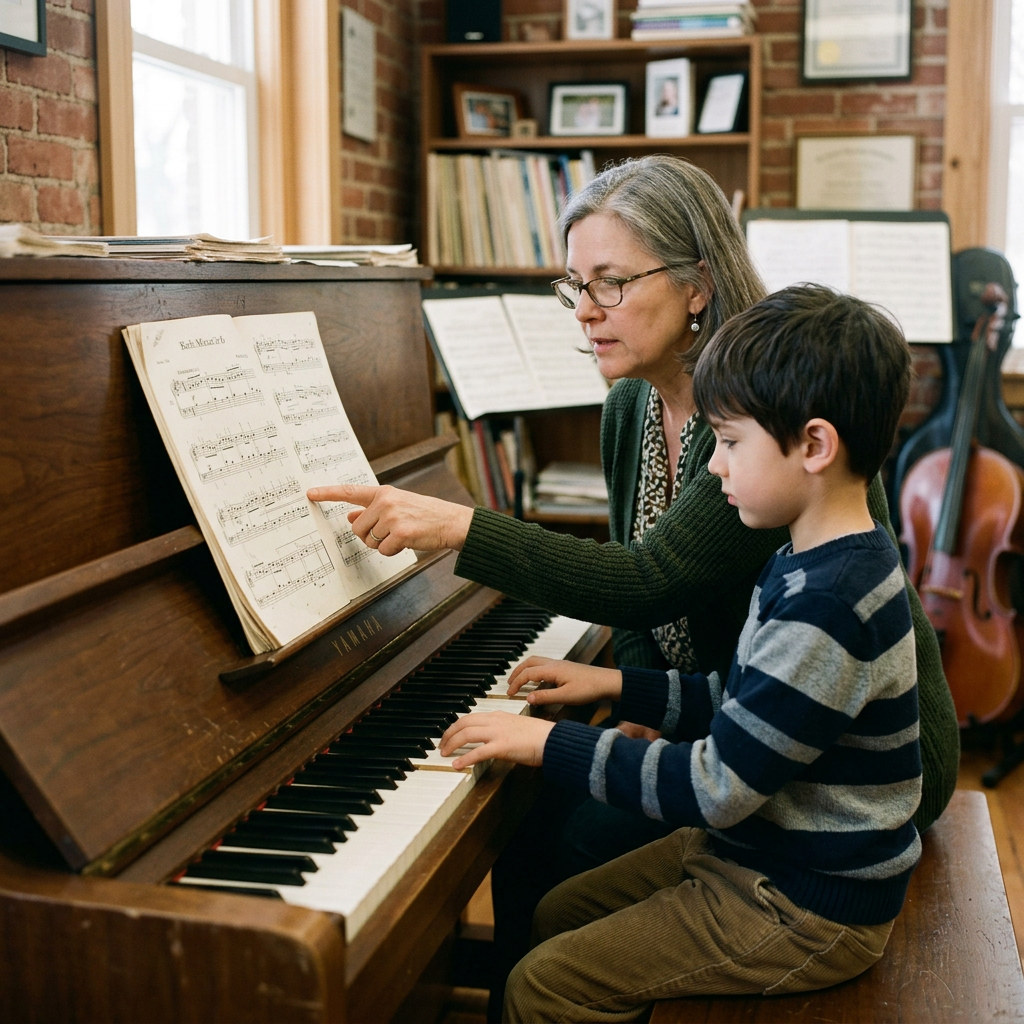
Choosing a piano teacher is one of the most important decisions parents make when introducing their child to music. The right teacher can help a beginner develop good habits, understand musical concepts, and build the confidence to tackle increasingly challenging pieces. However, knowing how to choose a piano teacher involves more than comparing qualifications, lesson prices, or locations. Children learn differently, and a teaching approach that works well for one student may not be the best fit for another. Some children respond to clear routines and structured goals. Others need more encouragement, variety, or time to become comfortable with unfamiliar material. A qualified teacher should recognize these differences while maintaining meaningful educational expectations. Parents should also consider what their child will learn beyond playing individual songs. Reading music, understanding rhythm, developing listening skills, and learning basic music theory all contribute to a stronger musical foundation. At Ontario Conservatory of Music (OCOM), nearly 90 years of music education experience have helped shape an approach that emphasizes structured learning, qualified instruction, and long-term musical development. Here are the factors parents should consider when choosing a piano teacher for their child.
1. Look Beyond Musical Ability to Teaching Qualifications
An accomplished pianist may have excellent technical skills, but performing and teaching require different abilities. Playing a difficult piece demands musical knowledge and practice. Teaching that same piece requires the ability to explain concepts, identify mistakes, adjust instruction, and recognize when a student is ready to progress. When evaluating a potential piano teacher, parents should ask about:
- Musical education: What formal training or recognized qualifications does the teacher have?
- Teaching experience: Has the instructor worked with children of a similar age and ability?
- Instructional approach: How does the teacher introduce new skills and correct mistakes?
- Curriculum: Does the teacher follow an organized educational program?
- Professional development: How does the teacher continue improving their teaching skills?
Qualifications matter, but they should be considered alongside teaching ability. For example, a teacher who performs professionally may be an excellent instructor for advanced students. However, teaching a six-year-old beginner requires a different set of communication and instructional skills. The best piano teacher for your child should understand both music and how children learn it.
2. Choose a Piano Teacher Who Understands Your Child’s Needs
Every child approaches music differently. Some beginners are enthusiastic and eager to play immediately. Others are cautious, easily distracted, or uncertain about trying something unfamiliar. An effective teacher recognizes these differences without abandoning educational goals.
Patience and encouragement matter
Learning piano involves making mistakes. Students may struggle with coordinating both hands, reading notes, or maintaining a steady rhythm. A good teacher should help students understand what went wrong and how to improve, rather than simply telling them to repeat a passage. For example, when a child struggles with a difficult section, the teacher might slow the music down, separate the hands, or divide the passage into smaller sections. This teaches students how to approach a challenge instead of relying entirely on the teacher for corrections.
The right balance between structure and flexibility
A supportive teacher does not necessarily make every lesson easy. Children benefit from appropriate challenges, clear expectations, and opportunities to recognize their progress. The goal is to find an instructor who can adapt the teaching process while maintaining a consistent direction.
3. Ask Whether Lessons Follow a Structured Curriculum
One of the most important questions parents can ask is whether piano lessons follow an organized curriculum. A student can learn to play several familiar songs without necessarily developing the skills needed to become an independent musician. Structured piano instruction connects individual lessons to broader educational goals. A comprehensive beginner program should address several areas:
- Piano technique: Posture, hand position, finger coordination, and controlled movement.
- Music reading: Understanding notes, rhythms, and musical notation.
- Listening skills: Recognizing musical patterns, phrasing, and changes in sound.
- Music theory: Understanding how music is organized and written.
- Musical expression: Learning to communicate mood, dynamics, and character through performance.
- Practice habits: Developing effective ways to work independently between lessons.
These subjects should support one another. For example, a student learning a simple melody may also explore note values, recognize repeating patterns, and understand why certain notes sound good together. This is one of the important distinctions between learning to play songs and receiving a well-rounded music education. A structured curriculum also gives teachers and parents a clearer way to recognize progress.
4. Understand How the Teacher Measures Progress
Parents naturally want to know whether their child is improving. However, musical progress is not always measured by the number of songs a student can play. A child may spend several weeks improving rhythm, hand coordination, or note-reading accuracy without adding many new pieces to their repertoire. These improvements can be just as important as learning a new song.
Signs of meaningful musical progress
Look for changes such as:
- Your child can recognize more notes without assistance.
- They maintain a steadier rhythm when playing.
- They can identify and correct some of their own mistakes.
- They approach unfamiliar music with greater independence.
- They demonstrate better control over dynamics and expression.
Parents should ask how the teacher evaluates these skills and communicates progress. Formal examinations, including those offered through the Royal Conservatory of Music, can provide useful milestones for students pursuing that path. However, examinations are not the only measure of musical achievement. A thoughtful teacher should be able to explain what a student is learning, why it matters, and what comes next.
5. Consider Communication Between the Teacher and Parents
Piano lessons generally take place once or a few times each week. Much of a student’s development depends on what happens between lessons. For younger children, parents play an important supporting role. That does not mean parents need to understand music theory or know how to play piano themselves. Instead, they need enough information to help establish routines and encourage consistent practice. A good teacher should be able to explain:
- What the child should practise before the next lesson.
- Approximately how much practice is appropriate.
- Which skills need particular attention.
- How parents can help without taking over.
- Whether the student is meeting reasonable expectations.
Communication should also work in both directions. If a child becomes frustrated, loses interest, or struggles to maintain a practice routine, parents should feel comfortable discussing those concerns. Sometimes a small adjustment in expectations or practice methods can make a meaningful difference.
6. Look for Opportunities Beyond Individual Piano Lessons
Private piano instruction provides focused attention, but music education can extend beyond individual lessons. As students develop, they may benefit from opportunities to perform, study additional musical subjects, or collaborate with other musicians. These experiences help students apply what they learn in different settings.
Recitals and performances
Performing gives students a reason to prepare music to a higher standard. It also introduces valuable experiences such as managing mistakes, listening to other performers, and completing a piece in front of an audience. Not every student will enjoy performing immediately, and participation should reflect their readiness and educational goals.
Music theory, harmony, and history
Learning about music beyond the keyboard helps students understand what they are playing. Theory introduces the principles of written music. Harmony explores how notes and chords work together. Music history provides context for composers, musical styles, and traditions. These subjects become increasingly valuable as students advance.
Group music experiences
Playing with other musicians introduces skills that are difficult to develop through individual practice alone. Students must listen carefully, maintain a shared tempo, and adjust their playing to work with others. When comparing music schools, parents should consider whether these additional opportunities are available as their child’s interests and abilities develop.
7. Ask About the Teacher’s Long-Term Educational Approach
A child beginning piano lessons may not have a specific musical goal. Some students eventually pursue examinations or advanced studies. Others enjoy playing recreationally or exploring different styles of music. A good teacher should help students build foundational skills that support different possibilities. For example, a student who learns to read music confidently can explore unfamiliar pieces without depending entirely on demonstrations or memorization. Similarly, a student who understands rhythm and basic harmony has tools that can transfer to other instruments or musical activities. Parents should ask how the teacher’s approach supports development beyond the first few months. At Ontario Conservatory of Music, structured instruction reflects a long-standing commitment to teaching music as a complete educational subject, rather than focusing exclusively on individual pieces. That broader perspective is worth considering when choosing a teacher.
8. Questions to Ask Before Choosing a Piano Teacher
Before enrolling your child, arrange a conversation with the instructor or music school. You do not need an extensive interview, but a few thoughtful questions can reveal a great deal about the learning experience. Consider asking:
- What experience do you have teaching children at my child’s age and level?
- Do you follow a structured curriculum, and what does it include?
- How do you adapt lessons for students who learn at different speeds?
- How do you measure progress and communicate it to parents?
- What are your expectations for practice between lessons?
- Are students introduced to music theory and reading notation?
- Are recitals, examinations, or group activities available?
- What happens if my child becomes frustrated or loses motivation?
Pay attention to how clearly the teacher answers. An experienced educator should be able to explain their approach in language parents understand. You should also consider practical factors such as scheduling, travel time, lesson policies, and the availability of suitable practice equipment at home. A strong educational program still needs to fit reasonably into family life.
9. Recognizing When a Piano Teacher Is the Right Fit
There is no single teaching personality that works for every child. Some students respond well to energetic instruction. Others prefer a quieter, more methodical approach. The important question is whether the teacher creates an environment where your child can learn effectively. After the first several lessons, consider whether your child:
- Understands what they are expected to practise.
- Feels comfortable asking questions.
- Receives clear explanations when something is difficult.
- Is developing new skills at a reasonable pace.
- Shows signs of growing independence.
Enthusiasm is helpful, but it is not the only indicator of a successful match. Children will sometimes resist practice or find a lesson challenging, even with an excellent teacher. Rather than judging the experience by whether every lesson is enjoyable, look for a combination of engagement, appropriate expectations, and steady educational development.
Frequently Asked Questions About Choosing a Piano Teacher
Does my child need a teacher with formal piano qualifications?
Formal musical training can provide an important foundation for effective instruction, but qualifications alone do not guarantee a good teaching experience. Parents should also consider experience working with children, communication skills, and the teacher’s instructional approach. Ideally, a piano teacher combines strong musical knowledge with the ability to explain concepts clearly and adapt instruction to the student’s needs.
Is it better to choose a private piano teacher or a music school?
Both options can provide effective instruction. An independent teacher may offer scheduling flexibility and a personalized approach. An established music school may provide a structured curriculum, consistent educational standards, and access to additional subjects or performance opportunities. Parents should compare the actual instruction, teacher qualifications, program structure, and opportunities available rather than assuming one setting is automatically better.
How can I tell whether my child is making progress in piano lessons?
Progress includes more than learning new songs. Watch for improvements in note reading, rhythm, coordination, listening, and independent practice. Your child may also become better at identifying mistakes and working through difficult passages. Ask the teacher to explain the skills being developed and what milestones are appropriate for your child’s experience level.
Should a beginner piano teacher include music theory?
Yes. Basic music theory can be introduced naturally alongside practical piano instruction. Young beginners can learn note values, rhythm patterns, musical symbols, and simple relationships between notes without requiring advanced written exercises. As students progress, theory provides a framework for understanding increasingly complex music and helps connect what they see on the page with what they hear and play.
What if my child doesn’t connect with their piano teacher?
Start by discussing your concerns with the teacher. Some children need time to become comfortable with a new instructor, while others may benefit from changes in lesson structure or communication. If the difficulty continues, a different teaching style may be more suitable. Finding the right match is important, but it is also worth distinguishing a genuine mismatch from the normal challenges of learning a new skill.
Choosing a Piano Teacher Is an Investment in Your Child’s Musical Education
Understanding how to choose a piano teacher means looking beyond convenience, price, or performance ability. The strongest choice is an instructor who understands your child’s learning needs, provides clear educational direction, communicates effectively, and helps develop skills that extend beyond individual songs. For families exploring piano lessons in Toronto and the Greater Toronto Area, Ontario Conservatory of Music offers structured music education supported by nearly 90 years of teaching experience. Whether your child is beginning their first lessons or looking for a more comprehensive learning environment, the goal should be the same: building a musical foundation that supports continued learning, personal achievement, and enjoyment of music. Explore piano lessons and music education programs at Ontario Conservatory of Music, or learn more about getting started.